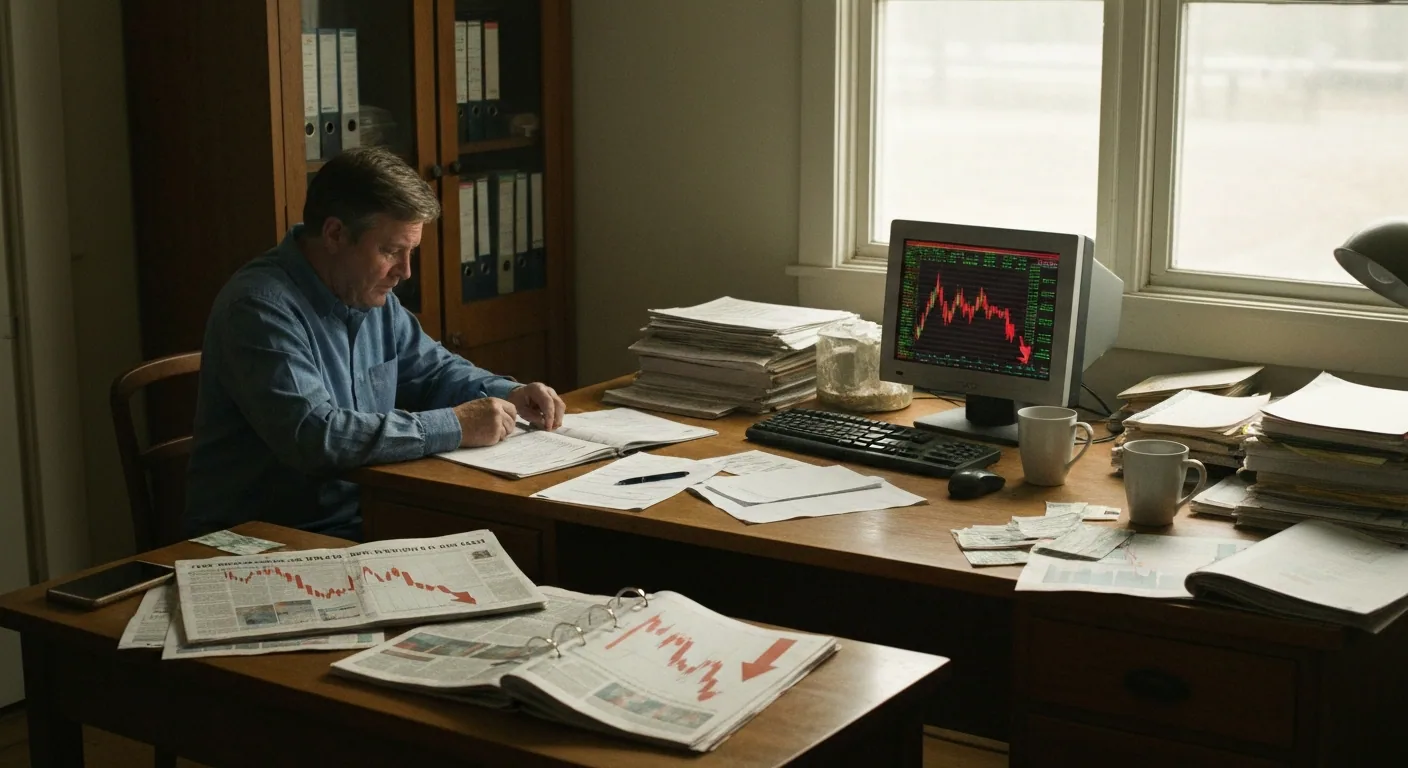
A company can dominate its industry for decades and still become a disappointing investment. During a decade when the broader U.S. stock market delivered strong gains, several once-prominent companies experienced substantial declines.
The causes weren't identical. Some struggled with technological disruption or changing consumer habits. Others were hurt by commodity cycles, major liabilities, economic shocks, or strategic decisions. Together, the examples demonstrate why reputation and past performance alone can't tell you what a stock will do next.
Share Price Doesn't Tell the Entire Story
When evaluating a poorly performing stock, distinguish between its share-price decline and an investor's total return.
Dividends can partially offset a falling share price. Conversely, an investor who bought a stock primarily for income can be affected twice if both its price and dividend decline.
Index removal also deserves context. Being removed from a major index usually reflects problems that already exist rather than causing them. However, index funds tracking that benchmark may subsequently need to sell the stock.
Familiar Products Don't Guarantee Investment Success
Consumer companies can appear relatively defensive because their products remain familiar and widely used.
But established businesses can still struggle when consumer preferences change.
A large packaged-food company, for example, experienced substantial declines after a major merger as operational challenges and regulatory scrutiny weighed on the business.
The lesson isn't that established consumer companies are inherently risky. It's that recognizable products don't eliminate questions about valuation, management, competition, or changing demand.
Commodity Cycles Can Overwhelm Strong Histories
Energy and materials companies illustrate another risk.
A business might produce consistent results for decades before commodity prices move sharply against it. Oil, natural gas, fertilizer, and other commodity producers have limited control over the market prices of what they sell.
When prices decline, revenue and profitability can deteriorate quickly.
This is why a company's historical stability shouldn't automatically be projected into the future, particularly when its earnings depend heavily on volatile external prices.
Consumer Behavior Can Change Faster Than Businesses
Traditional retailers faced another problem as shopping moved increasingly online.
Companies built around physical stores had to invest in websites, distribution networks, digital marketing, and new fulfillment systems while continuing to operate expensive store networks.
Businesses that reacted slowly could lose customers to competitors that adapted sooner.
The broader investing lesson applies beyond retail. When evaluating a company, consider not only what customers buy but also how they increasingly want to buy it.
Diversified Companies Can Still Have Concentrated Risks
A large corporation operating across multiple industries can appear diversified.
That doesn't necessarily mean its risks are evenly distributed.
A particularly weak or highly leveraged division can become large enough to overwhelm stronger operations elsewhere. Economic downturns can also reveal connections between business segments that appeared independent during better conditions.
Corporate complexity therefore shouldn't automatically be confused with effective diversification.
Unexpected Events Can Transform a Business
Some risks are extraordinarily difficult to predict.
Travel companies experienced dramatic disruption when pandemic restrictions halted operations. Businesses that normally generated revenue continuously suddenly faced extended periods with sharply reduced activity while many expenses remained.
Companies can respond by borrowing money, issuing shares, reducing dividends, or cutting expenses, but those actions can have long-term consequences for investors.
Stress-testing an investment against adverse scenarios can therefore be useful even when the specific crisis itself can't be predicted.
Legal Liabilities Can Overwhelm Stable Operations
Utilities are often associated with relatively predictable demand, but operational and legal risks can change that picture rapidly.
A catastrophic event connected with company infrastructure can generate enormous liabilities, regulatory scrutiny, lawsuits, and potentially bankruptcy.
This demonstrates why industry reputation alone isn't sufficient for assessing risk.
A supposedly defensive business can still have significant exposure to environmental, legal, operational, or regulatory events.
Technology Can Disrupt Former Market Leaders
Technology companies aren't protected from technological disruption themselves.
A company can dominate one generation of computing or communications and struggle when customers migrate toward a different technology.
The same pattern can affect telecommunications businesses. Declining demand for older services can reduce revenue even while a company invests heavily in newer infrastructure.
Investors therefore need to distinguish between a company's historical importance and its competitive position today.
Dividend Stocks Still Carry Business Risk
High or established dividends can make declining companies attractive to income-focused investors.
But dividends aren't guaranteed.
If earnings and cash flow weaken, management may reduce or suspend distributions to preserve capital. A declining share price combined with a dividend cut can significantly alter the investment case.
Rather than focusing only on dividend yield, examine whether the underlying business appears capable of supporting the payment.
Recovery Isn't Guaranteed—or Predictable
A stock that has fallen substantially can eventually recover, but a large decline alone doesn't make an investment inexpensive.
Some struggling businesses successfully restructure. Others adapt to new markets or benefit when industry conditions improve. Some remain below previous highs for years, and others never recover.
That uncertainty makes hindsight particularly dangerous.
Looking backward, the warning signs surrounding a failed investment can appear obvious. Investors making decisions at the time don't have the benefit of knowing which risks will eventually matter most.
Look Beyond a Company's Reputation
The broader lesson from major stock declines isn't that established companies should be avoided. It's that longevity, brand recognition, previous market leadership, and historical returns don't guarantee future performance.
When researching an individual stock, consider its debt, competitive position, industry trends, management decisions, legal exposure, cash flow, valuation, and ability to adapt.
Diversification can also reduce the damage caused when one company develops problems you couldn't reasonably anticipate.
Every investment carries uncertainty. Understanding that even seemingly durable businesses can change dramatically is one reason evaluating the entire portfolio—not just your confidence in an individual company—matters for long-term investing.