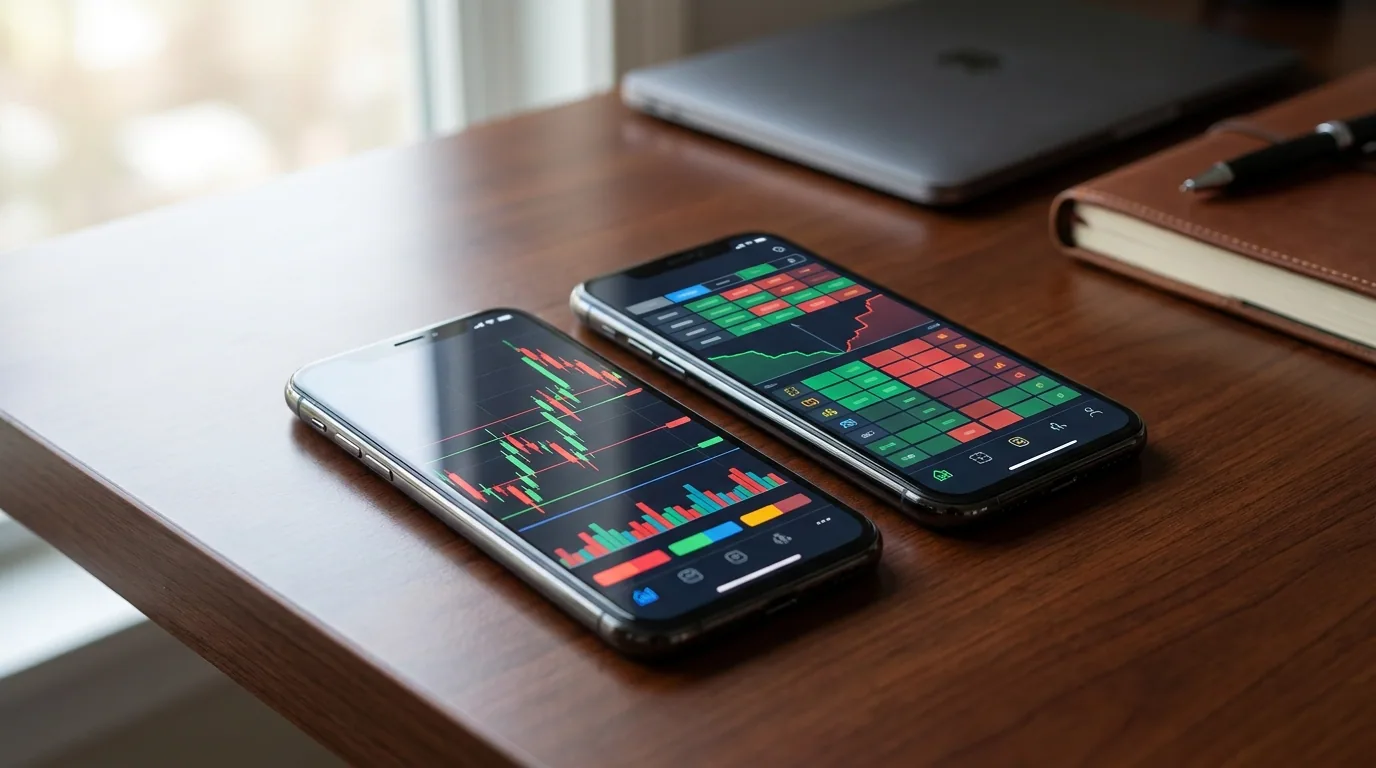
Online trading platforms can appear nearly identical at first. Many offer commission-free stock and ETF trading, no minimum for basic brokerage accounts, extended-hours access, advanced charts, and simulated trading.
The differences become clearer when you look beyond basic commissions. Retirement accounts, available asset classes, real-time market data, research features, and recurring subscription costs can significantly affect which platform fits the way you invest.
Start With the Available Investments
Stocks, ETFs, options, and other commonly traded securities are available through many investing platforms, but the broader investment menu can vary.
Some brokerages expand into fixed-income investments, money market funds, futures, cryptocurrency, or international securities.
That difference matters only if you intend to use those investments.
If your strategy consists primarily of diversified ETFs and a few individual stocks, an extensive asset menu may provide little additional value. If you want bonds or more specialized investments, however, confirming availability should be one of your first steps.
Account Types Can Be a Deciding Factor
Not every trading platform provides retirement accounts.
A brokerage offering only standard taxable and margin accounts may work for active trading but won't meet your needs if you also want a Traditional IRA, Roth IRA, or rollover IRA.
Retirement accounts have different tax rules and restrictions from taxable brokerage accounts, so they shouldn't be selected solely because they're available.
Still, having multiple account types within one platform can simplify management when you're balancing taxable investing with longer-term retirement goals.
Level 2 Market Data May Come With Conditions
Active traders may care about Level 2 market data because it provides a deeper look at market activity than a standard quote.
Rather than showing only the current bid and ask, Level 2 information can display multiple price levels and orders waiting in the market.
Platforms may provide this data temporarily for free and then require either a subscription or a qualifying account balance for continued access.
If you regularly use order-book information, compare the ongoing cost rather than focusing on the introductory period.
Commission-Free Doesn't Mean Cost-Free
Zero commissions have become common, but other investing costs remain.
Depending on the platform and investment, you may encounter regulatory charges, options-related fees, market-data subscriptions, margin interest, or other transaction costs.
ETFs and other funds can also carry internal expense ratios that aren't eliminated by commission-free trading.
Review the complete fee schedule based on the activities you expect to perform most frequently.
Charting Tools Matter More to Some Investors
Active traders often depend on technical indicators, drawing tools, customizable alerts, and detailed charts.
Both desktop and mobile trading platforms can provide sophisticated analysis, but simply counting the number of available indicators doesn't tell you whether the software will work for you.
Consider the specific tools you use and how quickly you can access them.
A feature-rich interface can be useful for an experienced trader while feeling unnecessarily complicated to someone making occasional long-term investments.
Paper Trading Can Help You Practice
Paper trading allows you to place simulated trades without risking actual money.
It can be particularly useful for learning an unfamiliar platform, understanding order types, or testing how a trading strategy behaves as markets move.
However, simulated results have limitations.
Paper trading doesn't reproduce the emotional consequences of losing real money. Simulated executions may also differ from live trading because actual orders encounter liquidity, spreads, and changing market conditions.
Use simulation as an educational tool rather than evidence that a strategy will be profitable.
Extended-Hours Trading Carries Different Risks
Some platforms allow stock and ETF trading before and after the regular market session.
This can be useful when significant information is released outside normal trading hours, such as corporate earnings.
However, extended-hours markets often have fewer participants. Lower liquidity can result in wider bid-ask spreads and greater price volatility.
Having access to more trading hours doesn't necessarily mean every hour provides equally favorable trading conditions.
Margin Requires Additional Caution
Margin accounts let you borrow money against eligible investments to increase purchasing power.
That leverage can amplify gains, but it can also magnify losses. A declining account may trigger additional requirements or result in positions being sold under the brokerage's margin rules.
Active traders should also understand any rules that may apply to frequent trading activity in margin accounts.
Platform alerts and monitoring features can be useful, but they don't replace understanding the underlying requirements yourself.
Know What Brokerage Protection Does—and Doesn't—Cover
Investor protection is frequently misunderstood.
Eligible brokerage accounts may receive protection if a brokerage fails and customer securities or cash are missing, subject to applicable rules and limits.
That doesn't insure your portfolio against market losses.
If an investment declines because of market conditions, poor company performance, or an unsuccessful trading strategy, brokerage-failure protection generally doesn't reimburse that loss.
Focus on the Features You'll Actually Use
Choosing between similar trading platforms becomes easier when you remove features they have in common.
Start with the differences that could materially affect your investing: whether you need retirement accounts, which asset classes you plan to trade, whether you regularly use Level 2 data, and how much you're willing to pay for research or market information.
Then consider charting, paper trading, extended-hours access, margin features, and the overall interface.
A platform with more features isn't automatically the better fit. The more useful choice is one that provides the accounts, investments, data, and tools your strategy actually requires without making you pay repeatedly for features you rarely use.