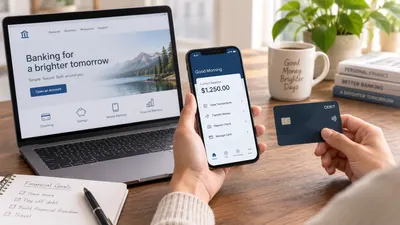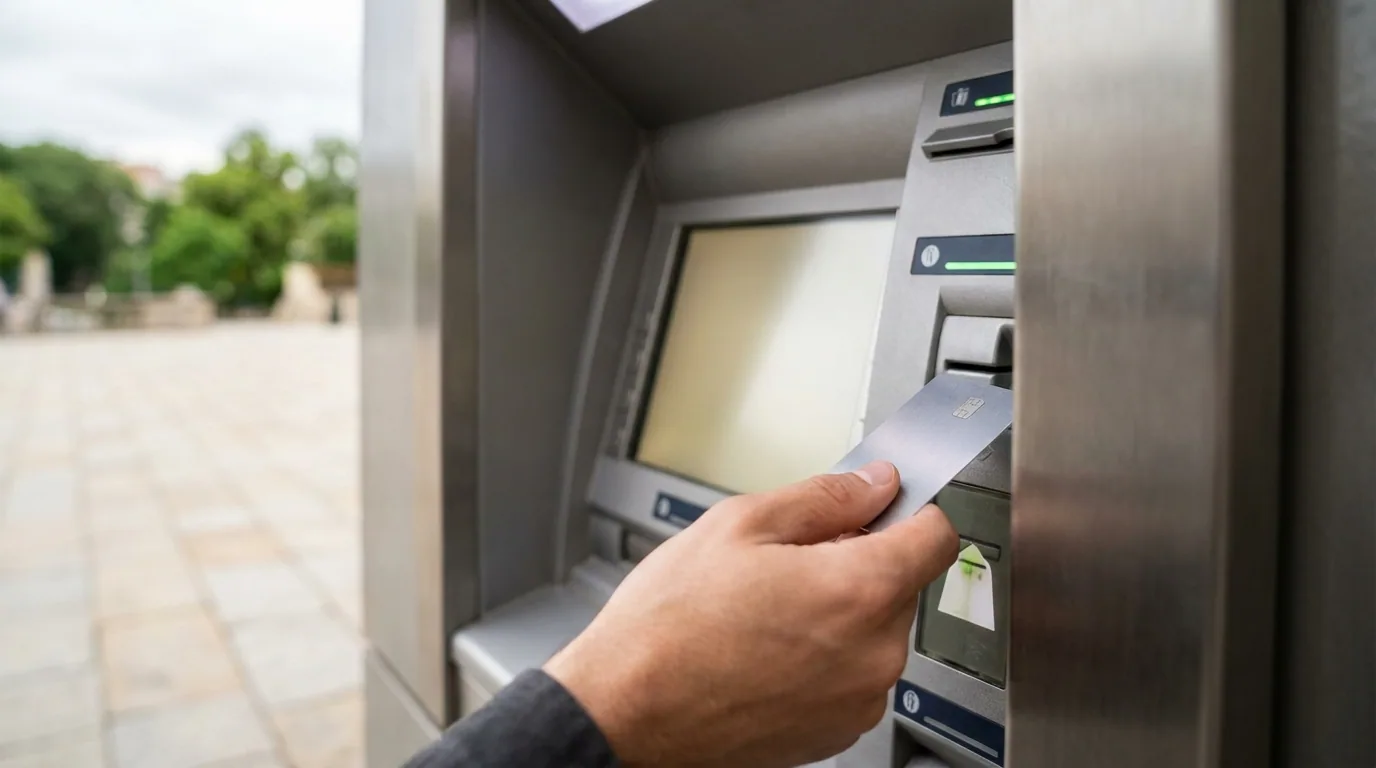
The best savings accounts with ATM access can give you direct access to cash while your balance continues earning interest. That combination can be helpful if you want savings separated from everyday checking without relying on bank transfers every time you need cash.
ATM availability alone should not determine which account you open. APY, monthly fees, withdrawal limits, minimum balances, ATM networks, deposit rules, and insurance protection can have a significant effect on the account's practical value.
UFB Direct and Alliant Credit Union are two current examples that pair interest-earning savings with dedicated ATM access. Their account structures differ, so comparing the details can help you identify which features fit your banking habits.
Best Savings Accounts With ATM Access to Compare in 2026
Among current savings accounts with ATM access, UFB Portfolio Savings and Alliant High-Rate Savings provide particularly clear examples of how direct cash access can work.
| Account | Current APY | Monthly Maintenance Fee | Balance Requirement for APY | ATM Access |
|---|---|---|---|---|
| UFB Portfolio Savings | 3.26% | $0 | None | Complimentary ATM card |
| Alliant High-Rate Savings | 3.01% | $0 monthly account fee | $100 average daily balance | Savings ATM card |
UFB states that its 3.26% APY is accurate as of September 11, 2026. Alliant lists a 3.01% APY with an August 5, 2026 effective date on its current deposit-rate schedule. Both rates are variable.
UFB Portfolio Savings: Strong for No-Balance-Requirement Savings
UFB Portfolio Savings currently pays 3.26% APY across its published balance tiers. The account has no maintenance or service fees, no minimum opening deposit requirement, and includes a complimentary ATM card.
Those terms make UFB worth reviewing if you want a high-yield savings account with ATM card access without maintaining a specific balance to qualify for the published APY.
Current account features include:
- 3.26% APY
- No minimum deposit requirement
- No maintenance or service fees
- Complimentary ATM card
- Digital banking tools
- Free transfers between direct deposit accounts
UFB states that Portfolio Savings is a tiered variable-rate account and that rates may change as frequently as daily without prior notice.
Banking services for UFB Direct are provided by Axos Bank. UFB states that deposits through Axos Bank brands are combined by ownership or vesting when FDIC coverage is calculated rather than receiving separate insurance simply because they carry different brand names.
Good fit for: Someone seeking competitive interest, direct ATM access, no opening minimum, and no monthly maintenance charge.
Potential limitation: The APY is variable, so today's rate should not be treated as permanent.
Alliant High-Rate Savings: Strong for Credit Union Savers
Alliant High-Rate Savings currently pays 3.01% APY when you maintain an average daily balance of at least $100. Its published rate carries an August 5, 2026 effective date.
The account can be paired with an Alliant Savings ATM Card. Alliant lists ATM transactions as free on its High-Rate Savings fee information, though an ATM owner can impose a surcharge when you use a machine outside Alliant's preferred network.
This makes Alliant one option for shoppers seeking savings accounts with free ATM access, provided they use eligible fee-free machines.
Current features include:
- 3.01% APY on qualifying balances
- $100 average daily balance needed to earn the published dividend
- No monthly account fee
- Savings ATM card availability
- Free ATM transactions from Alliant
- Up to 19 supplemental savings accounts
Alliant says members using a Savings ATM Card in good standing without a ChexSystems record generally have a $500 daily ATM withdrawal limit. Different limits can apply in certain circumstances.
Good fit for: Someone who can maintain at least $100 and wants a credit union account with direct savings access.
Potential limitation: Alliant's Savings ATM Card itself does not qualify for the ATM fee rebate that applies to eligible checking debit-card transactions. Using an out-of-network machine can therefore result in an ATM-owner surcharge.
What Does Free ATM Access Really Mean?
A fee-free ATM savings account does not necessarily mean every ATM withdrawal everywhere costs nothing.
Three different charges or restrictions can affect your access:
- Bank ATM fee: Your institution may charge for using an ATM.
- ATM-owner surcharge: The company operating an out-of-network machine may impose its own charge.
- Daily withdrawal limit: Your institution may restrict how much cash you can withdraw each day.
This distinction matters with Alliant. The credit union lists ATM transactions as free, yet it states that transactions at other ATMs may be subject to a surcharge from the ATM owner.
Check the ATM locator and fee disclosure before assuming every cash withdrawal will be free.
Is UFB Portfolio Savings a Good Choice for ATM Access?
UFB can be attractive if your priorities are earning interest and avoiding balance requirements.
Its Portfolio Savings account currently pays 3.26% APY on all published balance tiers, requires no minimum deposit, charges no maintenance or service fee, and includes a complimentary ATM card.
The combination makes it a practical online savings account with ATM access for people who want direct cash availability without maintaining a large balance.
There is still a tradeoff. The APY is variable and can change after opening. You should therefore check UFB's current rate immediately before applying rather than relying on an older comparison article.
Is Alliant High-Rate Savings a Good Choice for ATM Access?
Alliant may work well if you are comfortable joining a credit union and can maintain its balance requirement for dividends.
The High-Rate Savings account pays 3.01% APY on balances meeting the $100 average daily balance requirement. The account has no monthly fee, and Alliant lists ATM transactions as free on its savings fee schedule.
ATM-owner surcharges require attention. Alliant states that its Savings ATM Card does not qualify for the rebate provided on eligible checking debit-card transactions.
That makes using Alliant's preferred fee-free ATM network particularly important if avoiding withdrawal charges is one of your priorities.
Savings Account With ATM Card vs. Checking Account
A savings account with ATM card can give you cash access without requiring a transfer into checking first. However, an ATM card generally has narrower functionality than a checking debit card.
An ATM card is mainly designed for ATM transactions such as:
- Cash withdrawals
- Balance inquiries
- Eligible deposits
- Transfers supported by the institution
A debit card tied to checking is generally designed for ATM transactions and everyday purchases.
If your main goal is frequent spending, checking may provide easier access. If you primarily want to earn savings interest while retaining occasional cash access, an ATM-enabled savings product may fit better.
What Should You Compare Before Opening an Account?
The advertised APY is an important starting point, though several other details can affect your experience.
1. Current APY
Check the effective date attached to the advertised rate. Savings rates are generally variable, meaning they can rise or fall after account opening.
2. Monthly Fees
Recurring fees can reduce your interest earnings. UFB states that Portfolio Savings has no maintenance or service fees, while Alliant lists no monthly account fee for High-Rate Savings.
3. Minimum Balance
UFB currently has no minimum deposit requirement for Portfolio Savings. Alliant requires a $100 average daily balance to earn its published 3.01% APY.
4. ATM Network
Check how many usable machines are located near your home, workplace, or common travel destinations.
A large network can reduce the chance of paying an ATM-owner surcharge.
5. Daily Withdrawal Limit
A card does not provide unlimited access to the entire account balance through an ATM.
For example, Alliant states that members in good standing without a ChexSystems record have a $500 daily withdrawal limit on the Savings ATM Card.
6. Cash Deposit Capability
Not every ATM that allows withdrawals accepts cash or check deposits. Alliant specifically advises customers to verify an ATM's deposit capability.
7. Deposit Insurance
Savings held at an FDIC-insured bank are covered under applicable FDIC rules. The standard amount is $250,000 per depositor, per insured bank, per ownership category.
Credit unions generally use NCUA share insurance rather than FDIC coverage, so check which insurance system applies to the institution you select.
How Much Difference Does APY Make?
Small rate differences become increasingly relevant as your balance grows.
Suppose two savings accounts have similar fees and access rules. One pays 3.01% APY and another pays 3.26%.
The higher APY can generate additional interest over time, assuming rates remain unchanged. However, variable savings rates can change, so a difference visible today may disappear later.
That is why an account should generally be evaluated using several factors together:
- APY
- Monthly fees
- Balance requirements
- ATM availability
- Withdrawal limits
- Digital banking tools
- Deposit insurance
An account paying a slightly lower rate may still fit your needs if it provides easier access to fee-free machines you regularly use.
Can You Withdraw Directly From Savings at an ATM?
Yes, when your bank or credit union issues an ATM card linked directly to the savings account.
UFB lists a complimentary ATM card as a Portfolio Savings feature. Alliant also supports a Savings ATM Card for eligible savings accounts.
Still, direct access does not mean unrestricted access. Daily withdrawal caps and ATM-owner surcharges may apply.
Are ATM-Enabled Savings Accounts Good for Emergency Funds?
They can be useful for emergency savings if direct cash availability matters to you.
An ATM card can remove the need to wait for an electronic transfer before withdrawing cash. That may be useful during an urgent expense.
There is a behavioral tradeoff, though. Easier cash access can make savings easier to spend. If keeping your emergency fund slightly separated from everyday spending helps you save, an account without a card may suit that goal better.
Can You Use a Savings ATM Card for Purchases?
Usually, an ATM-only card has different functionality from a Visa or Mastercard debit card.
An ATM card primarily accesses compatible machines. A debit card can generally make purchases wherever its payment network is accepted.
Check the institution's card agreement if point-of-sale spending matters to you. Do not assume that receiving a card with a savings account automatically gives you the same functionality as a checking debit card.
What Are the Main Pros and Cons?
Potential Advantages
- Direct access to savings at eligible ATMs
- Interest earnings
- Less reliance on transfers to checking
- No monthly maintenance fees on some accounts
- Useful access to emergency cash
- Digital account management
Potential Drawbacks
- Daily ATM withdrawal limits
- Possible out-of-network surcharges
- Variable APYs
- ATM cards may not support everyday purchases
- Some accounts require minimum balances to earn interest
- Not every ATM accepts deposits
Which Account Structure Fits Different Types of Savers?
For no minimum opening deposit: UFB Portfolio Savings currently has no minimum deposit requirement and pays 3.26% APY across its published tiers.
For credit union banking: Alliant High-Rate Savings currently pays 3.01% APY when you maintain the required $100 average daily balance.
For frequent cash withdrawals: Focus heavily on the ATM network and daily cash limit rather than selecting an account solely from its APY.
For emergency savings: Look at ATM availability alongside transfer speed, account fees, withdrawal caps, and insurance protection.
Choosing Among the Best Savings Accounts With ATM Access
The best savings accounts with ATM access combine competitive interest with practical ways to reach your cash without creating unnecessary fees or restrictions.
UFB Portfolio Savings currently pairs a 3.26% APY with no minimum deposit requirement, no maintenance or service fees, and a complimentary ATM card. Alliant High-Rate Savings currently pays 3.01% APY when its $100 average daily balance requirement is met and supports direct ATM access through a Savings ATM Card.
Before opening either account, check the latest APY, ATM network, daily withdrawal cap, out-of-network charges, minimum-balance rules, and insurance coverage. Rates and account terms can change, so current disclosures should carry greater weight than older rankings.