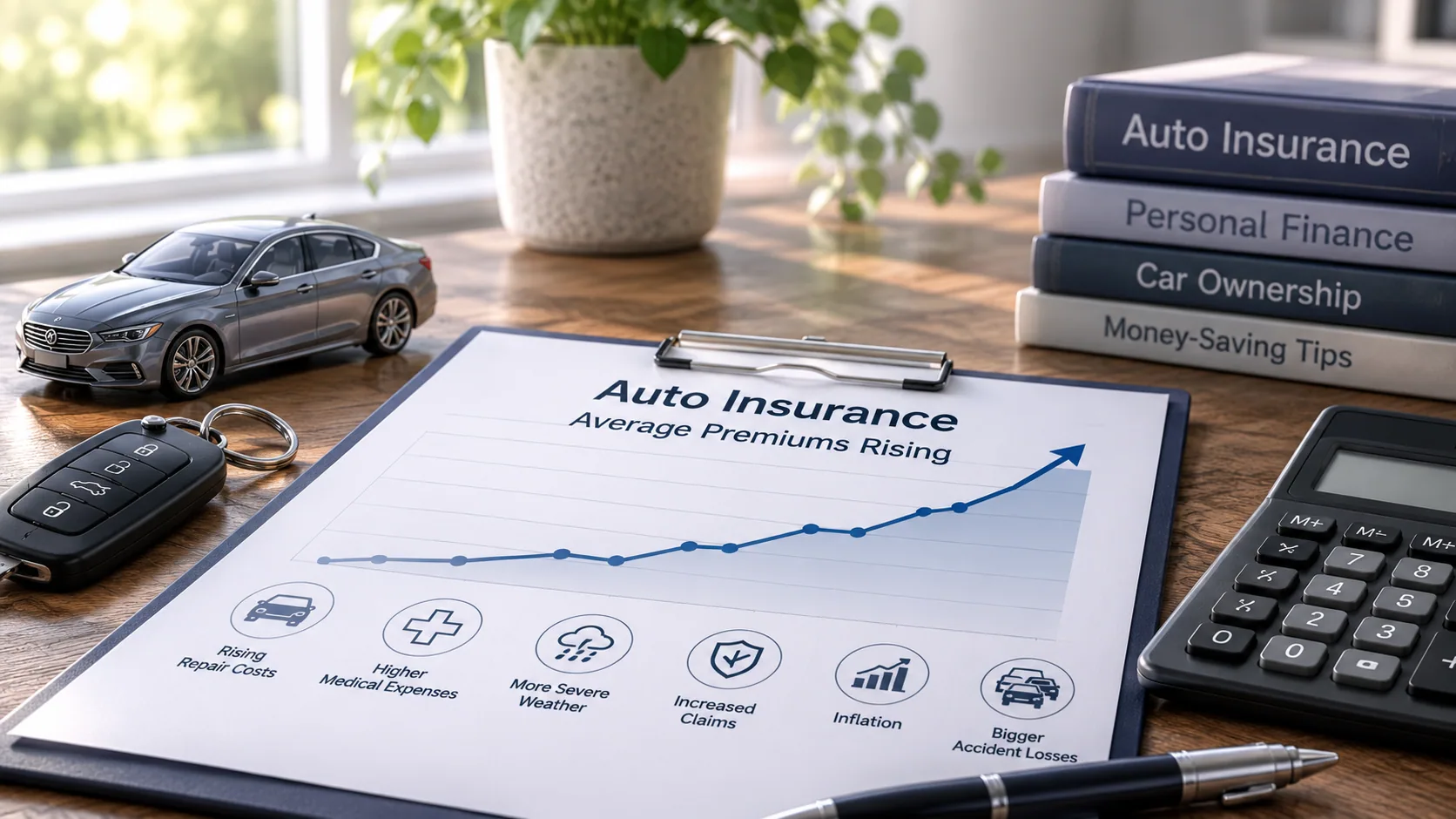
Rising auto insurance rates can be confusing, especially when your driving record has stayed the same. A clean record may help your pricing, yet insurers use several pieces of information when calculating a premium.
The National Association of Insurance Commissioners explains that insurers use underwriting to evaluate risk and rating to determine the price of a policy based on the expected likelihood and cost of future claims. Common rating factors include location, driving record, claims history, vehicle type, mileage, previous coverage, and selected deductibles and coverage.
Current national figures also show that individual renewal increases do not always follow the broader trend. The Bureau of Labor Statistics reported that motor vehicle insurance prices were 4.5% lower in July 2026 than in July 2025, while motor vehicle maintenance and repair costs increased 6.6% during the same period.
That means some drivers may still face higher premiums even when the national insurance index is declining.
Here are six auto insurance cost factors that can help explain what may be happening.
1. Higher Repair Costs Can Raise Claim Expenses
Vehicle repairs remain one of the expenses insurers face when settling covered claims.
According to BLS data, motor vehicle maintenance and repair prices increased 6.6% year over year in July 2026. Motor vehicle repair prices alone increased 6.2%, while maintenance and servicing rose 7.3%.
Higher repair costs can affect insurers because covered collision or comprehensive claims may become costlier to settle.
Repair bills may include expenses tied to:
- Replacement parts
- Body work
- Mechanical repairs
- Labor
- Electronic components
- Sensors and vehicle technology
An increase in repair prices does not automatically produce an equal increase in insurance rates. Insurers use claims experience and other actuarial information when setting prices.
Still, repair expenses can help explain why car insurance rates are increasing for some policyholders.
2. Claims History and Expected Losses Can Affect Premiums
Insurance pricing looks partly at the likelihood and expected cost of future claims.
The NAIC explains that rating assigns a price based on expected claim costs and claim probability. Claims history is also listed among the common factors insurers may use when evaluating auto insurance risk.
Your own claims record can matter, though insurers may also examine loss patterns involving similar groups of drivers.
Examples can include:
- Collision claims
- Property damage claims
- Injury claims
- Theft
- Weather-related losses
- Other covered vehicle damage
Not every claim causes the same pricing change. State rules, fault, claim type, insurer practices, and other rating variables may influence the result.
This is why car insurance rate increases can occur even when two drivers appear to have similar vehicles and coverage.
3. Location Can Influence Insurance Pricing
Where you live and keep your vehicle may affect how an insurer evaluates risk.
The NAIC lists location as one of the main rating factors used in auto insurance pricing.
Claim patterns can vary from one area to another because drivers may face different levels of:
- Traffic density
- Vehicle theft
- Collision frequency
- Repair expenses
- Weather exposure
- Property damage claims
A move to another ZIP code can therefore affect a premium even when the driver and vehicle remain the same.
Insurance regulation also happens largely at the state level, so pricing rules can differ depending on where the policy is issued.
Location remains one of the major factors affecting auto insurance rates, though its exact influence varies by insurer and state.
4. Driving Record and Claims History Matter
Your driving record is another important part of insurance pricing.
The NAIC lists driving experience, driving record, and claims history among the primary factors insurers may use.
A driving profile may include:
- At-fault accidents
- Traffic violations
- Previous claims
- Years of driving experience
The effect of an accident or violation can differ between insurers.
A clean driving record may help, yet it does not mean your premium will remain unchanged forever. Other insurer pricing changes can still affect car insurance renewal rates.
That is one reason some drivers see a higher renewal even without a recent ticket or collision.
5. Your Vehicle and Mileage Can Change What You Pay
The vehicle you drive can affect the amount you pay for insurance.
According to the NAIC, vehicle type, vehicle use, and miles driven are common auto insurance rating factors.
Insurers may evaluate characteristics such as:
- Make and model
- Vehicle use
- Annual mileage
- Expected repair expenses
- Claims associated with similar vehicles
A driver who spends substantially greater time on the road may have different risk exposure from someone who drives infrequently.
Changing vehicles can therefore affect auto insurance premiums even when you stay with the same insurer and maintain the same driving record.
Getting an insurance quote before buying another vehicle can help you estimate how it could affect your future policy price.
6. Coverage, Deductibles, and Credit Information May Affect Rates
The coverage you select determines how much financial responsibility the insurer may carry when a covered claim occurs.
The NAIC lists selected coverages and deductibles among the main auto insurance rating factors.
Coverage Limits
Higher policy limits can increase the insurer's potential payout after a covered claim.
Changing those limits may therefore affect the premium.
Deductibles
The deductible is the amount you generally pay toward a covered collision or comprehensive loss before applicable insurance coverage pays.
The NAIC notes that accepting greater financial responsibility through a higher deductible can result in lower premiums in some situations.
A higher deductible can reduce the premium, though it can leave you paying a larger amount following a covered claim.
Credit-Based Insurance Scores
Credit information may also influence pricing where state law allows its use.
The NAIC reported in March 2026 that insurance companies often use credit information when deciding eligibility or pricing for auto insurance in states where the practice is permitted. A credit-based insurance score estimates insurance claim risk and is different from a lending score used to evaluate repayment risk.
Some states restrict or prohibit the use of credit-based insurance information.
Six Auto Insurance Cost Factors at a Glance
| Factor | Possible effect on pricing |
|---|---|
| Repair costs | Higher repair expenses may increase claim costs |
| Claims experience | Claims frequency and severity may affect insurer pricing |
| Location | Local claim patterns can affect risk assessments |
| Driving history | Accidents and violations may influence premiums |
| Vehicle and mileage | Vehicle characteristics and usage can affect expected losses |
| Coverage and personal factors | Limits, deductibles, prior coverage, and permitted credit information may affect price |
These factors do not affect every policyholder in the same way. Insurers use different pricing formulas, while state law may restrict how certain information is used.
Why Can Your Insurance Increase Without an Accident?
A higher renewal does not automatically mean your driving history caused the change.
Several other pricing factors may have changed.
For example:
- Your insurer may have changed its base rates.
- Repair costs may have increased.
- Your location may have different claims trends.
- A discount may have ended.
- Your annual mileage may have changed.
- Your vehicle may be rated differently.
- Your deductible or coverage may have changed.
This is why reviewing the current policy beside the previous one can be useful.
Look for changes in:
- Coverage limits
- Deductibles
- Discounts
- Drivers
- Vehicles
- Mileage
- Policy location
If nothing obvious changed, you can ask the insurer what contributed to the renewal price.
Are Auto Insurance Rates Still Rising Nationwide?
The latest federal data do not show a year-over-year nationwide increase as of July 2026.
BLS reported that motor vehicle insurance prices were 4.5% lower in July 2026 compared with July 2025. The index also declined 0.3% between June and July on a seasonally adjusted basis.
At the same time, motor vehicle maintenance and repair prices remained 6.6% above their level from a year earlier.
Those figures show why national trends and individual policies need to be separated.
A national decline does not guarantee that every driver will receive a lower renewal.
Why Do Auto Insurance Rates Differ Between Drivers?
Two drivers can receive different rates even when they own similar vehicles.
The NAIC identifies several personal and policy characteristics insurers may use, including:
- Location
- Age
- Driving experience
- Driving record
- Claims history
- Previous insurance coverage
- Vehicle type
- Vehicle use
- Mileage
- Coverage selections
- Deductibles
Some insurers may also use credit-related information where allowed by law.
Differences in these factors can lead to very different quotes.
What Can You Do When Your Renewal Price Goes Up?
If your renewal increases, start by checking exactly what changed.
Compare Your Policy Documents
Compare your current declarations page against the previous term.
Look at:
- Premium
- Coverage limits
- Deductibles
- Discounts
- Listed drivers
- Listed vehicles
A change in one of those areas may explain part of the increase.
Ask Your Insurer for an Explanation
Ask which rating factors or policy changes contributed to the new price.
The answer may help you determine if a discount ended, a policy characteristic changed, or the insurer adjusted its rates.
Compare Equivalent Insurance Quotes
Getting quotes from several companies may show how differently insurers price the same driver.
Keep coverage as similar as possible by comparing the same:
- Liability limits
- Collision coverage
- Comprehensive coverage
- Deductibles
- Uninsured or underinsured motorist coverage
- Optional protections
A cheaper quote that carries substantially less coverage is not a direct comparison.
Review Your Deductible
Increasing your collision or comprehensive deductible may lower the premium with some insurers.
Make sure the deductible remains affordable if you need to file a covered claim.
Ask About Discounts
Insurance discounts differ by insurer and state.
Ask about any discounts related to driving history, mileage, multiple vehicles, policy combinations, vehicle safety features, or other eligibility criteria.
What Drivers Should Know Before Their Next Renewal
Rising auto insurance rates do not always come from one cause.
Repair expenses, claims experience, location, driving history, vehicle characteristics, and policy choices can all play a role in an individual premium.
Current federal figures also show that the broader national trend has shifted. Motor vehicle insurance prices were down 4.5% year over year in July 2026, while maintenance and repair costs remained 6.6% higher.
If your renewal price increases, compare your policy documents, identify any changes in coverage or discounts, ask the insurer what affected the premium, and compare equivalent quotes if needed.
Understanding the main auto insurance cost factors can help you make sense of a renewal change instead of assuming that every increase comes from your driving record.