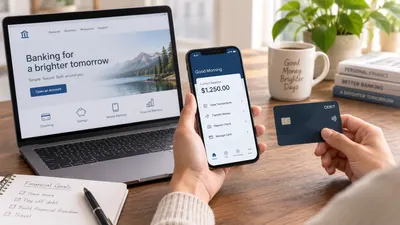
The best banks for millennials can depend on how you manage your paycheck, savings, bills, travel spending, and everyday purchases. Some people may prioritize a competitive savings rate and mobile banking, while others may care far more about ATM access, cash deposits, branch availability, or avoiding monthly fees.
Several banks now combine traditional checking and savings with mobile-first features such as early direct deposit, automated savings tools, budgeting categories, and large fee-free ATM networks.
For this comparison, the strongest choices are evaluated primarily on account costs, savings potential, ATM availability, digital features, account minimums, and convenience. Rates are variable and can change after an account is opened.
Best Banks for Millennials at a Glance
| Bank or Account | Strongest Feature | Monthly Checking Fee | Savings Feature | Branch Access |
|---|---|---|---|---|
| SoFi Bank | Checking and savings combination | $0 | Competitive savings APY with qualifying activity | No traditional branches |
| Ally Bank | Savings organization tools | $0 | 3.00% APY as of Sept. 2, 2026 | Online only |
| Capital One | Digital banking plus some physical access | $0 | High-yield 360 Performance Savings | Cafés and branches in select areas |
| Charles Schwab Bank | ATM and international use | $0 | Checking linked to brokerage | Limited banking branches |
| Wealthfront Cash Account | Cash yield and automated investing connection | $0 | 3.30% base APY | No branches |
Wealthfront appears here as a banking alternative rather than a bank. Its Cash Account is provided through Wealthfront Brokerage, with eligible cash swept to participating banks.
1. SoFi Bank: Strong for Checking and Savings in One Place
SoFi may suit millennials who want to keep checking and savings within one digital platform.
SoFi Checking and Savings currently charges no account, service, or maintenance fees. SoFi states that transaction fees can still apply to services such as outgoing wires, Instant Transfers, and certain remittance transfers. There is no minimum balance requirement for its advertised deposit rates.
Eligible users may also receive qualifying direct deposits up to two days early, depending on when SoFi receives notice of the incoming payment.
SoFi also participates in the Allpoint ATM network, giving customers access to over 55,000 ATMs without a SoFi ATM fee. Third-party charges may still apply outside that network.
Why SoFi May Fit Millennials
SoFi can be attractive for people who want:
- checking and savings managed together;
- no monthly maintenance fee;
- early paycheck access;
- mobile-first banking;
- automated savings features; and
- a large ATM network.
Its savings rates can depend on qualifying activity or membership status, so check the current rate tier before depositing a large balance.
Among best bank accounts for millennials, SoFi may work particularly well for people whose income arrives through direct deposit.
2. Ally Bank: Strong for Goal-Based Saving
Ally Bank combines checking and savings with digital tools designed to help organize spending and savings goals.
Its Savings Account was paying 3.00% APY as of September 2, 2026, with no minimum balance required to earn the stated APY and no monthly maintenance fee. The rate is variable.
The bank's Spending Account also has no monthly maintenance fee, overdraft fee, or minimum balance requirement. Customers can access over 75,000 Allpoint and MoneyPass ATMs without an Ally ATM fee, plus receive up to $10 per statement cycle in reimbursements for fees charged by other U.S. ATMs.
Ally also provides savings buckets. Customers can create up to 30 buckets inside one Savings Account to separate money for different goals without opening dozens of accounts.
Why Ally May Fit Millennials
Ally can make sense for people who want:
- no monthly fee checking accounts;
- automated savings;
- digital budgeting tools;
- no traditional branch dependence;
- a competitive savings rate; and
- separate savings goals inside one account.
Its lack of conventional branches may matter if you regularly need in-person service.
For online banking for millennials, Ally's combination of saving and spending tools makes it a strong contender.
3. Capital One: Strong for Digital Banking With Some In-Person Access
Capital One sits between a fully online bank and a traditional branch bank.
Its 360 Checking account has no monthly fee, no minimum balance requirement, and no overdraft fee. Customers can use over 70,000 Capital One, MoneyPass, and Allpoint ATMs without an ATM fee from Capital One.
Capital One also provides the 360 Performance Savings account.
The account has no monthly maintenance fee and no minimum balance requirement. Capital One describes the savings rate as variable, meaning it can move after account opening.
Its digital tools include automatic savings settings and mobile check deposits. Capital One also maintains physical locations in selected markets.
Why Capital One May Fit Millennials
Capital One may suit someone who wants:
- fee-free checking;
- access to high-yield savings accounts;
- a large ATM network;
- automatic savings;
- mobile banking; and
- some access to physical locations.
That combination may appeal to millennials who like digital banking but do not want to give up in-person access completely.
4. Charles Schwab Bank: Strong for Frequent Travelers
Charles Schwab Bank's Investor Checking account takes a different approach.
The account has no monthly service fee and provides unlimited ATM fee rebates. Schwab also states that the account does not charge foreign transaction fees.
That can make it particularly useful for people who travel frequently or use ATMs outside their home network.
The account must be linked to a Schwab One brokerage account. Schwab emphasizes that brokerage assets are separate from FDIC-insured bank deposits and can lose value.
Why Schwab May Fit Millennials
Schwab can be worth comparing if you:
- travel internationally;
- use ATMs frequently;
- already invest through Schwab;
- want checking connected to brokerage services; or
- want to avoid monthly checking fees.
It may be less suitable if earning a high checking APY is your main priority.
For people comparing the best banks for young adults who frequently travel, its ATM reimbursement structure deserves attention.
5. Wealthfront Cash Account: Strong for Cash Management and Investing
Wealthfront is not technically a bank, so it needs to be classified differently from the four institutions above.
The Wealthfront Cash Account is provided by Wealthfront Brokerage LLC. Eligible cash is swept to participating banks, where it can earn interest and may qualify for FDIC insurance under applicable conditions.
As of January 30, 2026, Wealthfront's base Cash Account rate is 3.30% APY, with no minimum balance required to earn the base rate. The rate can change.
Wealthfront currently states that eligible Cash Account balances may receive FDIC coverage of up to $8 million through participating program banks, subject to program conditions.
The account also includes checking-style features such as:
- debit card access;
- account and routing numbers;
- bill payments;
- direct deposit; and
- mobile check deposit.
Why Wealthfront May Fit Millennials
Wealthfront may appeal to people who want their cash and investments managed through one financial platform.
It can be particularly relevant for users interested in digital banking accounts and investing tools rather than traditional branches.
Because Wealthfront itself is not a bank, read its program-bank and FDIC disclosures carefully.
Which Bank Is Best for Different Millennial Banking Needs?
The strongest account can change depending on what you value.
| Banking Priority | Option Worth Comparing |
|---|---|
| Checking and savings together | SoFi |
| Saving toward several goals | Ally |
| Digital banking plus physical access | Capital One |
| Travel and ATM reimbursements | Charles Schwab |
| Cash management plus investing | Wealthfront |
There is no single account that will fit every millennial equally well.
A person with regular direct deposit may benefit from one set of account features, while someone who travels frequently or saves aggressively may prioritize something completely different.
Why Monthly Fees Matter
A $10 or $12 monthly checking fee can add up to $120 or $144 annually if you do not meet the bank's waiver conditions.
That makes account fees an important comparison factor, particularly when several banks provide checking accounts without monthly maintenance charges.
SoFi, Ally, Capital One 360 Checking, and Schwab Investor Checking currently advertise no monthly maintenance or service fee for the accounts discussed here.
Other transaction charges can still apply, so read each bank's fee schedule.
Savings APY Can Matter as Your Balance Grows
A savings account's annual percentage yield determines how much interest a balance may earn over a year, assuming the rate stays unchanged and other stated conditions are met.
Rates on variable-rate deposit accounts can change.
For example, Ally's Savings Account was paying 3.00% APY as of September 2, 2026. Wealthfront's Cash Account had a 3.30% base APY as of January 30, 2026.
The highest APY today may not remain the highest later.
That is why savings rates should be checked alongside account fees, minimums, withdrawal rules, and qualification conditions.
Should Millennials Choose Online or Traditional Banking?
Online banks can provide lower fees and competitive savings yields because their operating structures differ from banks with large physical networks.
Traditional and hybrid banks may provide services that online-only institutions cannot easily replicate, including:
- face-to-face customer assistance;
- easier cash deposits;
- certain document services; and
- access to physical branches.
Your decision may depend on how frequently you actually use a branch.
If nearly all your banking happens through an app, an online account may provide the features you use most frequently.
If you regularly deposit cash or need in-person assistance, branch access could carry greater value.
Look for Automated Savings Features
Automatic savings tools can make account management easier.
Ally provides savings buckets and boosters, while Capital One allows customers to schedule automatic savings transfers. SoFi also provides automatic savings functions linked to its checking and savings platform.
These features may help separate money for:
- emergency savings;
- rent or housing expenses;
- travel;
- major purchases;
- annual bills; and
- longer-term financial goals.
Automation cannot guarantee higher savings, though it can reduce how often you need to manually move funds.
Early Direct Deposit Can Add Flexibility
Several banks now provide early access to qualifying direct deposits.
SoFi states that qualifying payments may arrive up to two days before the scheduled date, depending on when it receives notice of the deposit. Ally also advertises early direct deposit of up to two days.
“Up to two days early” is not a guaranteed two-day advance every payday. The actual timing depends on the payer and payment instructions.
This feature may still provide useful flexibility for recurring expenses.
ATM Access Can Be Easy to Overlook
ATM availability can matter even for people who rarely use cash.
Capital One provides access to over 70,000 fee-free ATMs, while Ally currently advertises over 75,000 no-fee Allpoint and MoneyPass ATMs. SoFi has access to over 55,000 Allpoint ATMs.
Schwab takes another route by reimbursing ATM fees on its Investor Checking account.
Before opening an account, check nearby ATM locations rather than relying solely on the national total.
FDIC Insurance Should Be Part of the Comparison
Eligible deposit accounts at FDIC-insured banks receive automatic federal deposit insurance.
The standard FDIC insurance amount is currently $250,000 per depositor, per FDIC-insured bank, per ownership category.
Checking accounts, savings accounts, money market deposit accounts, and CDs can qualify for FDIC coverage. Investments such as stocks, bonds, mutual funds, and crypto assets are not FDIC-insured deposit products.
Fintech and brokerage cash-management accounts require extra attention because the company whose app you use may not be the institution holding your deposits.
Check the program-bank disclosure before transferring money.
How to Compare the Best Banks for Millennials
Before opening an account, compare the features you are likely to use regularly.
Check the Monthly Cost
Look for:
- monthly maintenance fees;
- ATM charges;
- wire fees;
- foreign transaction fees; and
- overdraft policies.
Review Savings Rates
Check the current APY and see if you need:
- direct deposit;
- a minimum balance;
- a membership tier; or
- other qualifying activity.
Check ATM and Cash Access
A huge ATM network may matter less if none of the participating machines are near you.
Review Mobile Features
Useful mobile features may include:
- mobile check deposits;
- instant transaction alerts;
- automatic savings;
- budgeting tools;
- digital wallet support; and
- card locking.
Check Insurance
Confirm that deposits are held at an FDIC-insured institution and understand how coverage applies to your account.