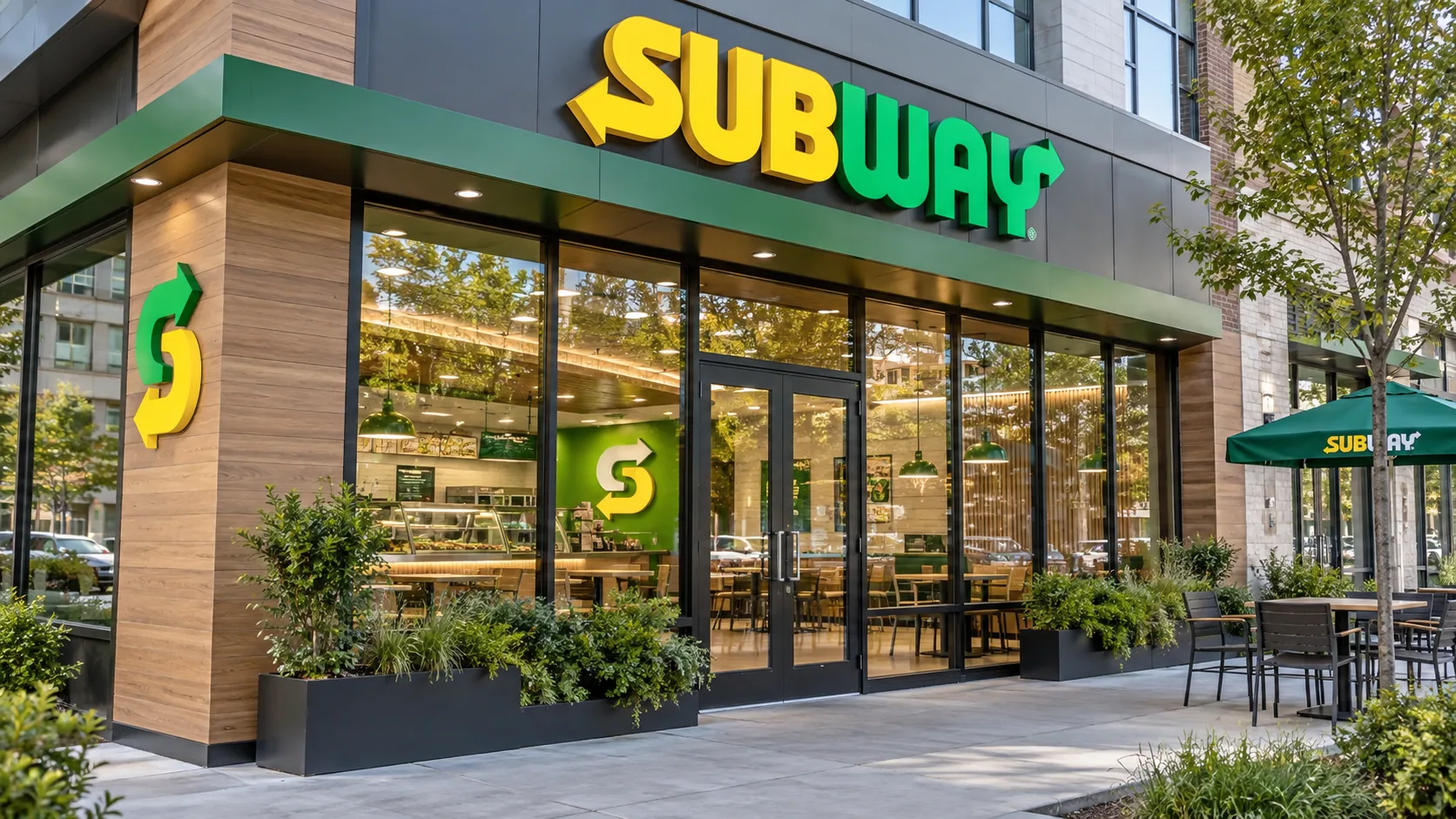
Subway store closures have continued to reduce the sandwich chain’s footprint across the United States. Subway ended 2024 with 19,502 domestic restaurants after posting a net decline of 631 locations that year. The contraction continued in 2025, when the chain reportedly recorded another net decline of 729 U.S. restaurants.
The numbers are striking for a brand that once operated over 27,000 U.S. restaurants. Yet the domestic decline tells only part of the story. Subway has simultaneously pursued international development, restaurant modernization, new franchise agreements, and changes intended to improve restaurant economics.
Here is what the latest figures show and why Subway’s U.S. footprint continues to shrink.
Subway Store Closures Continued in 2025
Subway’s U.S. restaurant count has been declining for years.
According to Subway franchise disclosure document figures reported by Restaurant Business, the company ended 2024 with 19,502 domestic restaurants. That represented a net decline of 631 locations during the year and marked the first time in roughly two decades that Subway operated fewer than 20,000 U.S. restaurants.
The decline did not stop there.
Restaurant Business reported in May 2026 that Subway recorded another net decline of 729 U.S. restaurants during 2025, citing the company's latest franchise disclosure document.
That makes the contraction a continuing business story rather than a one-year event.
Subway's U.S. Footprint Has Fallen Sharply Since 2015
Subway had about 27,100 domestic restaurants at its 2015 peak. By the end of 2024, the total had fallen to 19,502, according to franchise disclosure document data reported by Restaurant Business. That represented a reduction of roughly 7,600 restaurants from the 2015 level.
The reported 2025 decline extended that trend.
The figures help explain why searches for Subway closures continue to surface. The company has been reducing its domestic footprint across multiple years rather than carrying out a single nationwide shutdown.
Why Is Subway Closing Stores?
There is no single publicly stated reason covering every closure.
Subway has described its development approach as "smart growth." The company has said the strategy involves placing restaurants in the right locations and formats while working with suitable operators. It has also emphasized relocations, remodels, new restaurant development, and experienced multi-unit franchisees.
That matters because Subway operates primarily through independently owned franchises.
A restaurant's economics can depend on several factors, including:
- Customer traffic
- Sales
- Rent and occupancy expenses
- Labor expenses
- Food costs
- Franchise expenses
- Local competition
- Required investments in restaurant equipment or remodeling
Conditions can differ considerably between locations. A profitable restaurant in one market does not establish that another restaurant has the same economics.
As a result, reports about Subway closing stores should not automatically be interpreted as evidence that every location faces the same problem.
Subway Relies Heavily on Franchisees
Understanding the company's business structure helps put the closures into context.
Subway says its restaurants are owned and operated by a network of thousands of franchisees. The chain operates in over 100 countries and territories and has maintained a global footprint near 37,000 restaurants in recent company descriptions.
A Subway franchise operator runs individual restaurants under the brand's system rather than Subway directly operating every restaurant itself.
That means individual operators can face different financial circumstances.
Some may operate one restaurant, while others control multiple units. Location quality, lease terms, local wages, customer demand, debt, and operating execution can affect each franchisee differently.
This structure also means a restaurant closure does not necessarily represent a corporate decision to leave an entire city or state.
Is Subway Going Out of Business?
No available evidence indicates that Subway as a global company is shutting down.
The distinction between a declining U.S. restaurant count and the status of the entire company is important.
Subway continues operating tens of thousands of restaurants internationally and has pursued new development agreements outside the United States.
In October 2024, Subway said it had signed over 20 master franchise agreements during the preceding three years, representing over 10,000 future restaurant commitments. Seven agreements signed during 2024 covered expansion in markets including France, Brazil, Switzerland, Belgium, Paraguay, Mongolia, El Salvador, and Guatemala.
By May 2025, Subway said it had agreements with over 25 master franchisees and that those agreements represented over 10,000 future restaurant commitments. The company also said these partnerships accounted for over half of its global new restaurant openings during 2024.
The result is a company moving in different directions depending on the market: contraction in the United States alongside international development.
Why Can Subway Expand Overseas While Closing U.S. Stores?
The two trends can exist at the same time because restaurant economics and market penetration vary by country.
The United States already has an extensive Subway footprint. International markets may provide different development opportunities, particularly where the chain has fewer existing restaurants.
Subway has increasingly relied on master franchise agreements with large operators to develop international markets. These partners may receive development rights covering substantial territories and commit to opening new restaurants over a set period.
The company has said this approach is part of its global growth strategy.
Subway reported in 2025 that it planned to double its restaurant count across Europe, the Middle East, and Africa in the coming years.
So reports about Subway locations closing in the United States can coexist with announcements about new restaurant commitments elsewhere.
Subway Is Trying to Change Its Existing Restaurant Base
Closing weaker locations represents only one part of Subway's strategy.
The company has spent several years updating restaurants and changing how new units are developed.
In 2023, Subway said its North American strategy included relocations, remodels, new openings, and greater involvement from experienced multi-unit operators. At that time, the company expected an additional 3,600 North American restaurants to receive updated designs during the year.
Subway has continued emphasizing restaurant modernization in subsequent development announcements.
Its strategy includes traditional restaurants alongside nontraditional sites. Subway said in 2024 that nontraditional restaurants accounted for roughly one-quarter of its global footprint.
Such locations can include sites designed around environments outside the conventional standalone or shopping-center restaurant model.
New Ownership Has Changed the Corporate Picture
Subway also went through a major ownership change while its U.S. restaurant base was contracting.
Affiliates of private-equity firm Roark completed their acquisition of Subway on April 30, 2024. Subway said at the time that its existing strategy would continue to focus on menu and digital development, restaurant modernization, and international expansion.
Roark has extensive experience with franchise and multi-location businesses.
The ownership change did not immediately reverse the domestic restaurant decline. Subway posted the net decline of 631 U.S. restaurants in 2024 and another reported net decline of 729 in 2025.
Restaurant Business reported in May 2026 that Subway's corporate profitability had increased under Roark even as its restaurant count and royalty revenue faced pressure.
That distinction matters: the financial performance of the corporate organization and the number of operating restaurants do not always move in the same direction.
Are All Subway Restaurants at Risk of Closing?
No public information supports the conclusion that all Subway restaurants face closure.
Restaurant performance can differ by market and operator.
Subway's stated strategy includes opening new restaurants while relocating, remodeling, or closing others. The company has repeatedly described its development plans in terms of getting restaurants into suitable locations, formats, and ownership structures.
Consumers trying to determine the status of a specific restaurant should therefore check that location directly rather than assuming a nationwide closure trend means their local restaurant will shut down.
What Do the Closures Mean for Subway Franchisees?
The continuing decline raises a different question for current and prospective operators: how individual restaurant economics compare with the wider brand.
A large global restaurant network can provide brand recognition, purchasing systems, marketing, technology, and established operating procedures. It does not guarantee that every restaurant will generate a profit.
Prospective franchisees generally need to examine the current franchise disclosure document carefully.
Important areas can include:
- Initial investment requirements
- Franchise and royalty fees
- Advertising obligations
- Restaurant remodeling requirements
- Territory provisions
- Transfer and renewal conditions
- Historical openings and closures
- Available financial performance representations
Recent closure trends can provide useful context, yet national totals cannot determine the economics of a particular proposed restaurant.
Location-level traffic, lease terms, competition, financing costs, and operating expenses may have a major effect on performance.
How Many Subway Locations Are Left?
The answer depends on the geographic area and the reporting period.
At the end of 2024, Subway had 19,502 U.S. restaurants, according to franchise disclosure document figures reported by Restaurant Business.
Subway subsequently recorded a reported net decline of 729 U.S. restaurants in 2025.
Globally, Subway continued describing its network as nearly 37,000 restaurants in company announcements during 2025.
Those numbers can change as restaurants open and close, so readers should pay attention to the date and geographic scope attached to any location count.
What Is Happening to Subway in the U.S.?
The simplest answer is that Subway U.S. locations have been declining while the company restructures its domestic footprint.
The decline has lasted far longer than a single year. Subway had roughly 27,100 domestic restaurants in 2015 and ended 2024 with 19,502. The reported 729-location net decline in 2025 pushed the contraction into another year.
At the same time, Subway continues to remodel restaurants, work with multi-unit franchise operators, develop new formats, and pursue international expansion.
Those developments point to a strategy centered on changing the composition of the restaurant network rather than maintaining the largest possible U.S. store count.
Frequently Asked Questions
Why are so many Subway stores closing?
There is no single documented cause applying to every restaurant. Subway has described its strategy as focusing on restaurant location, format, image, and franchise operators. Individual franchise economics, including sales and operating expenses, can vary significantly.
How many Subway stores closed in 2024?
Subway posted a net decline of 631 U.S. restaurants in 2024, ending the year with 19,502 domestic locations, according to franchise disclosure document figures reported by Restaurant Business.
Did Subway close additional stores in 2025?
Yes. Restaurant Business reported from Subway's franchise disclosure document that the chain recorded another net decline of 729 U.S. restaurants during 2025.
Is Subway still opening new restaurants?
Yes. Subway continues pursuing development, particularly internationally. The company has announced master franchise agreements representing over 10,000 future restaurant commitments. A commitment represents planned development and should not be treated as an already-open restaurant.
Who owns Subway?
Affiliates of Roark completed their acquisition of Subway in April 2024. Subway's individual restaurants continue to be operated through its franchise network.
The U.S. Subway Network Is Still Changing
Subway store closures remain an active story because the U.S. contraction continued beyond the 631-location net decline reported for 2024. The reported loss of another 729 domestic restaurants in 2025 shows that the chain's U.S. footprint is still being reshaped.
That does not mean Subway is disappearing globally. The company continues operating tens of thousands of restaurants and signing international development agreements covering thousands of planned locations.
For consumers, the practical effect depends on their local market. For franchise operators and potential investors, the continuing U.S. contraction makes store-level economics, location quality, operating expenses, and current franchise disclosure information especially relevant when assessing the brand.