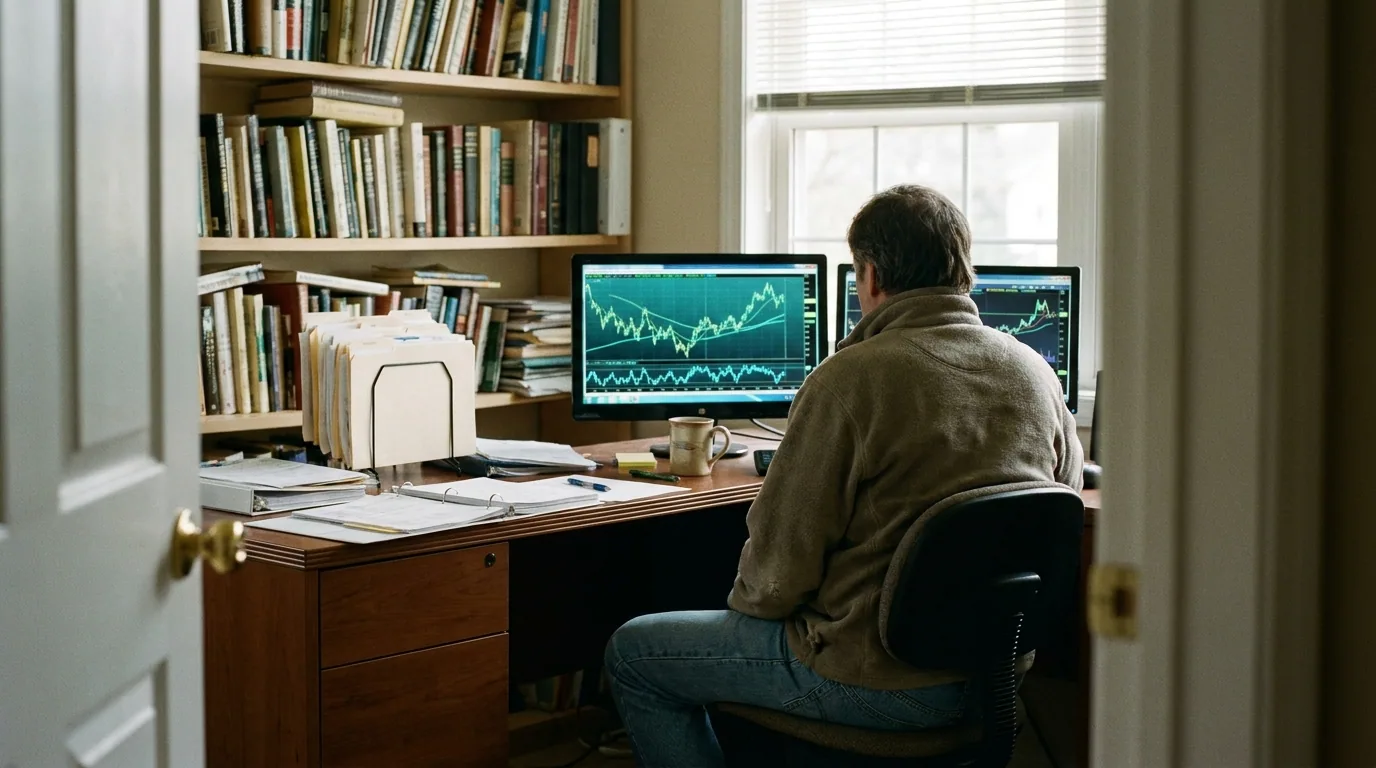
Ownership of American stocks sits mostly with higher-income households. Jeff Bezos's salary is one clue as to why: it has been modest for years, because among the very wealthy the money is in shares of successful companies rather than in a paycheck.
A share promises nothing the way a bond does, and the market has still grown steadily over decades. The reasons the wealthy keep buying aren't especially mysterious.
Ownership Pays Differently Than a Salary
A salary is capped by hours and by what an employer will pay. A share of a company isn't. Most large fortunes trace back to one of two things: building a successful company, or owning part of somebody else's.
For wealth-building purposes, a day job ranks below both, even though nearly everyone needs one.
This is also why headline salary figures for famous executives tell you so little. The number on the payroll line barely matters when the same person holds a large equity stake.
Compounding Rewards Investors Who Can Leave Money Alone
Compounding is the plainest idea in investing and the hardest to rush. You earn a return, that return starts earning its own return, and so on. Time does the work.
Wealthy investors get more out of it for one structural reason: they can afford to leave the money where it is. Someone who may need the balance for a roof repair or a stretch between jobs doesn't have that freedom, and selling early cuts the process short.
Capital Appreciation Is Taxed Only When You Sell
Capital appreciation just means a share is worth more than what you paid. On paper, that gain isn't a taxable event. Sell at a profit and it becomes a capital gain, which is taxable.
That gap between "worth more" and "sold" does quiet work in large portfolios. Postponing a sale postpones the tax bill with it, and some investors stretch that delay across decades, or pass holdings on to the next generation without ever triggering the gain themselves.
A long-term holder and a frequent trader can own the exact same stock and end up with very different tax experiences.
Dividends Pay Without Ongoing Work, and Can Be Cut
Dividend-paying stocks generate money with little or no ongoing work once the shares are bought, which is why they get grouped under passive income.
There's a tax wrinkle: the IRS may treat dividends as ordinary income, so "passive" describes the effort rather than the tax rate.
Something else to know before leaning on dividend income. Payouts aren't fixed. Companies set them, and companies can reduce or stop them, usually when business conditions turn. Nothing obliges a company to keep paying.
Taxes on Dividends, Gains, Losses, and Retirement Accounts
Buying stocks isn't a tax break by itself. Specific situations create one.
| Situation | Tax treatment |
|---|---|
| Dividends received | May be taxed as ordinary income |
| Shares sold at a gain | Capital gain, taxable |
| Shares sold at a loss | Investment loss may be deducted |
| Shares held, not sold | No capital gain until the sale |
The loss deduction has a catch that trips people up: you have to actually sell. A position sitting deep in the red in your account is a paper loss, not a deduction.
Specific rules govern how and when losses can be claimed, so this is territory where a tax professional earns their fee.
Separately, tax-advantaged accounts such as IRAs and 401(k)s exist to hold long-term investments under different tax rules than a standard brokerage account.
Idle Cash and the Size of an Emergency Fund
Money has to go somewhere. Investors with capital tend to see a large, uninvested bank balance as an opportunity cost rather than safety, since that money isn't growing.
The balance point is an emergency fund, and how big it should be is personal. It depends on what makes you comfortable and what your life costs. Past that cushion, parking too much cash can slow wealth-building rather than protect it.
The Wealthiest 10% Own Almost 90% of All Stocks
That concentration figure explains a lot on its own. Part of it is simple access: getting into the market takes money you don't need for rent.
The less obvious part is knowledge that travels through families. If your parents talked about brokerage accounts, dividends, and holding periods at the kitchen table, investing feels like routine housekeeping rather than a leap.
Someone who grew up without those conversations often has to learn the vocabulary before they can even ask a useful question, and that lag has nothing to do with intelligence or discipline.
One Bad Investment Costs a Small Account More
Everyone picks a loser eventually. The difference is what a loser costs you. A single bad investment can reshape an average earner's net worth; for someone already sitting on substantial assets, it's a line item.
Diversification helps, and it's available at any account size. Certainty isn't. Spreading money across more holdings limits how much any one of them can do to a portfolio, but it doesn't rule out losses.
Studying a Company's History, or Buying an Index Fund
There are roughly as many investing styles as there are investors, but people who take it seriously tend to study a company's history before committing.
For anyone who doesn't want to evaluate individual companies, index funds (a fund tracking the S&P 500, for instance) offer a simpler route, spreading money across a basket rather than a single name.
Inflation Hedges Aim to Keep a Portfolio Steady
Inflation has been in the headlines, and it's been on investors' minds too. One response is the inflation hedge: historically steady stocks held as a buffer when prices climb.
Wealthy investors use hedges for two jobs at once, smoothing out swings in what the portfolio is worth and adding diversification along the way. "Hedge" describes an intention, though, not a guarantee.
Extra Investment Income Against a $60,580 Average Wage
The average American earns around $60,580 a year. That figure has to absorb housing costs and gas prices that move on their own schedule.
Plenty of people aren't in the market to build a dynasty. They want a second stream of money running into a budget that has no slack in it.
Some Investors Buy the Companies They Believe In
A smaller motive, but a real one. For investors with cash to spare, choosing what to own is a way of backing a company or product they like.
Others aren't attached to any particular business at all and simply enjoy trading.
What Carries Over to a Smaller Account
Most of the advantages above come from already having money: patience, a cushion, the freedom to postpone a sale. Those don't transfer.
The mechanics do. Compounding works the same way on a small balance, index funds don't ask how much you brought, and the tax rules on gains, losses, and retirement accounts apply to every investor equally.
No account size comes with a guarantee attached, either. When a company cuts its dividend, the payment stops arriving in the large portfolios and the small ones on the same day.