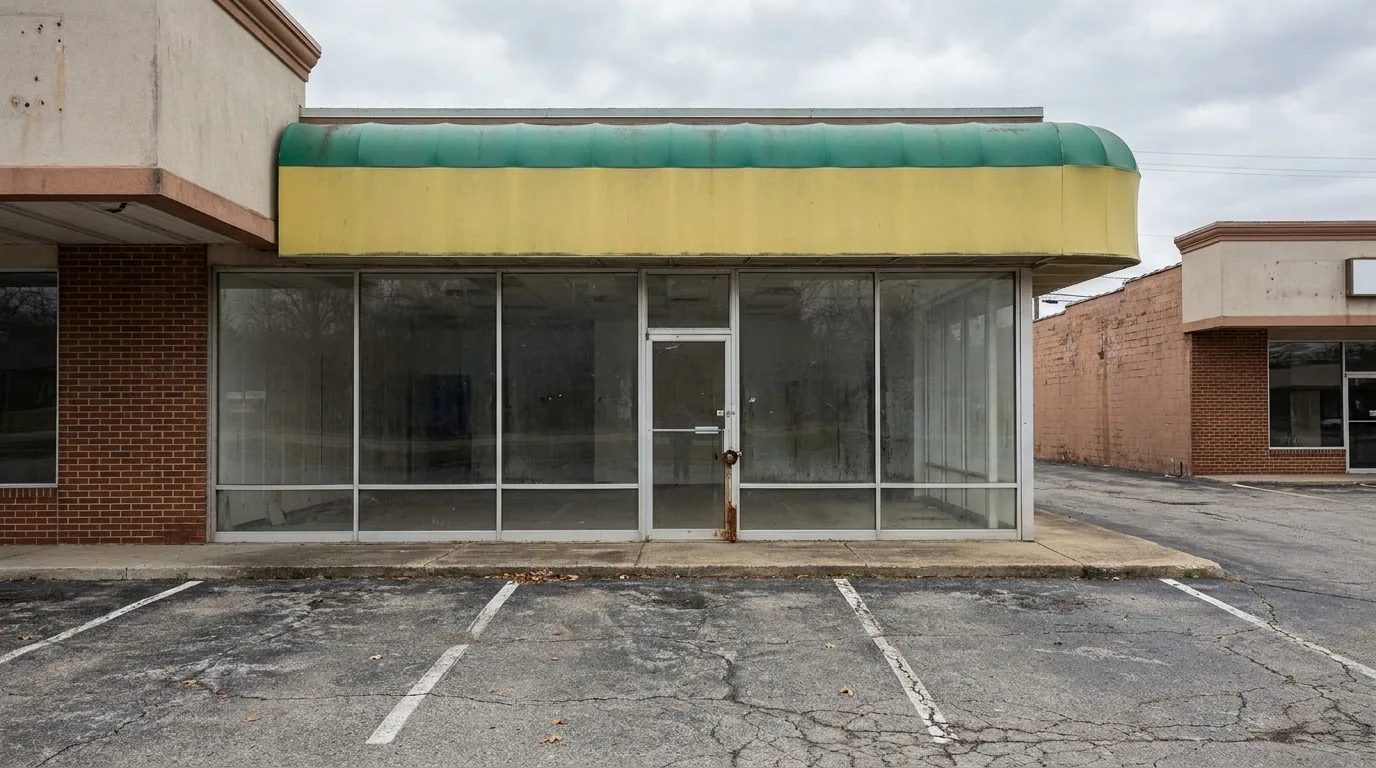
Subway had more than 27,000 U.S. restaurants in 2015. Today the count is 19,502, roughly 7,600 fewer than at the peak. The 631 closings recorded in 2024 took the domestic total under 20,000, a mark the chain hadn't dropped below in twenty years. Outside the United States, the direction reverses: Subway is opening stores faster than it closes them.
Closings Every Year From 2021 Through 2024
The 2024 number isn't a one-off. Subway has lost U.S. restaurants four years running.
| Year | U.S. locations closed |
|---|---|
| 2021 | 1,043 |
| 2022 | 571 |
| 2023 | 443 |
| 2024 | 631 |
The 2021 figure is the outlier, and much of it plausibly tracks the pandemic's hit to foot traffic and franchise finances. What came after is harder to explain away: the losses never stopped, and 2024 was worse than either of the two years before it. Measured from the 2015 high, the drop is about 7,600 restaurants.
One caveat about closure counts. A chain's net store number folds in relocations along with shutdowns, and Subway has said it closes or relocates locations as needed without breaking out which is which. A store that moves three blocks to a better corner turns up in the same neighborhood news as one that goes dark for good.
The "Smart Growth" Explanation and the Franchisee Math Under It
Asked about the shrinking footprint, the company has pointed to a program it calls "Smart Growth." By its own description, the decisions are data-driven and turn on three things: where a restaurant sits, whether its look and format are current, and how well the franchisee operating it performs.
Whatever the label, the arithmetic sits with the franchisees. Corporate doesn't run most of these sandwich shops. Franchisees do, and each one is weighing rent, labor, delivery-app fees and remodel costs against a store's sales. When a lease renewal arrives at a location that was busy in 2014 and quiet now, that's the sort of decision that becomes a closure statistic later.
Picture a Subway tucked into a strip mall built around an office park. The lunch rush that justified the lease has thinned out, the landlord wants more per square foot than it did five years ago, and the franchise agreement calls for a costly interior refresh. Nothing dramatic happens. The lease just doesn't get signed again.
23 Oregon Stores Closed, and Staff Say Nobody Told Them
Oregon lost 23 Subway locations in 2024, all franchised under CapTen Enterprises and Subfecta LLC. A manager at one of them told a Portland television station that she and her crew learned the store was closing only when it happened, that nobody from the company explained why, and that she was out of a job without notice. She also described food orders that had stopped arriving in the weeks beforehand, even as corporate messaging held that operations were normal.
Workers hearing one thing while seeing another is a recurring feature of chain closures.
Nearly 37,000 Locations Worldwide, With 10,000 More in the Pipeline
The U.S. story and the global story run in opposite directions. Subway has reported positive global net restaurant growth for a second straight year, with nearly 37,000 locations worldwide and roughly 10,000 more stores in its international pipeline. That combination, a brand contracting at home while expanding almost everywhere else, is a familiar shape for mature American fast-food chains: the domestic market is saturated and the growth room is abroad.
The $5 Footlong and the Canoe Cut Customers Still Bring Up
Ask people what they miss and two things come up before any store name. One is the $5 footlong, the promotion that anchored Subway's value reputation for years. The other is the old U-gouge bread cut, sometimes called a canoe cut, which carved a trough out of the roll and held toppings in place. Subway has attributed the switch to the hinge cut to customer polling. Plenty of customers suspect the real advantage is that it's quicker for employees to make.
Neither loss shows up in a store count. Both feed the perception problem the company is now spending money to fix.
Remodels, Kiosk Tests, and Who Pays for Them
The surviving restaurants are getting a new look aimed at younger customers. The redesign brightens the interior, swaps in signage written for the neighborhood, and reworks the layout so online and delivery orders fit into normal operations instead of interrupting them.
Subway is testing the digital side in select locations rather than rolling it out all at once. Those stores are trying:
- Self-serve ordering kiosks
- Ordering screens
- Kitchen display systems
Remodels cost money, and for a franchisee already squeezed on margins that expense lands at an awkward moment. It's one reason store investment and store closures can pick up in the same year.
A $6.99 Footlong in May 2025, Plus Doritos Nachos and a Footlong Cookie
On the menu side, Subway has leaned on promotions and novelty. For the full month of May 2025, any footlong was priced at $6.99. Newer additions include Doritos Footlong Nachos, a Hot Honey sauce and an Oreo Footlong Cookie, items aimed less at the daily lunch crowd than at the customer who hasn't walked in for a year.
Red Lobster, Hooters and Denny's Are Closing Too
The closure wave is broader than one sandwich brand. Red Robin, Red Lobster, TGI Friday's, Hooters, Denny's and IHOP have all closed significant numbers of locations. The pressures behind them look alike across the sector: private equity ownership structures that load restaurant groups with debt, and household budgets where dining out is one of the first line items cut when disposable income tightens.
Fred DeLuca's $1,000 Loan and the 2023 Sale
The chain began in 1965, when Fred DeLuca borrowed $1,000 from family friend Peter Buck, a physicist, to open a sandwich shop in Connecticut. It was originally a way to pay for medical school. The name became Subway in 1968. By 1974 the pair ran 16 shops in the state and turned to franchising to grow faster.
DeLuca handed control to his sister in 2015 while he was ill with cancer. The company never fully found its footing after his death, and in 2023 the family announced a sale to private ownership. The years of steepest decline in the U.S. count overlap almost exactly with that transition.
What a Falling Store Count Measures, and What It Doesn't
A shrinking location count measures real estate decisions, not necessarily brand health. A chain can close weak stores and still sell more sandwiches per remaining shop.
For anyone tracking one particular store, the signals are operational rather than official: shortened hours, a thinner ingredient selection, equipment that stays broken.
Each of those 631 closings began as arithmetic somewhere well below headquarters, with a franchisee comparing rent, sales and the cost of a required remodel and then letting a lease lapse. The national count is the sum of those, several thousand times over.