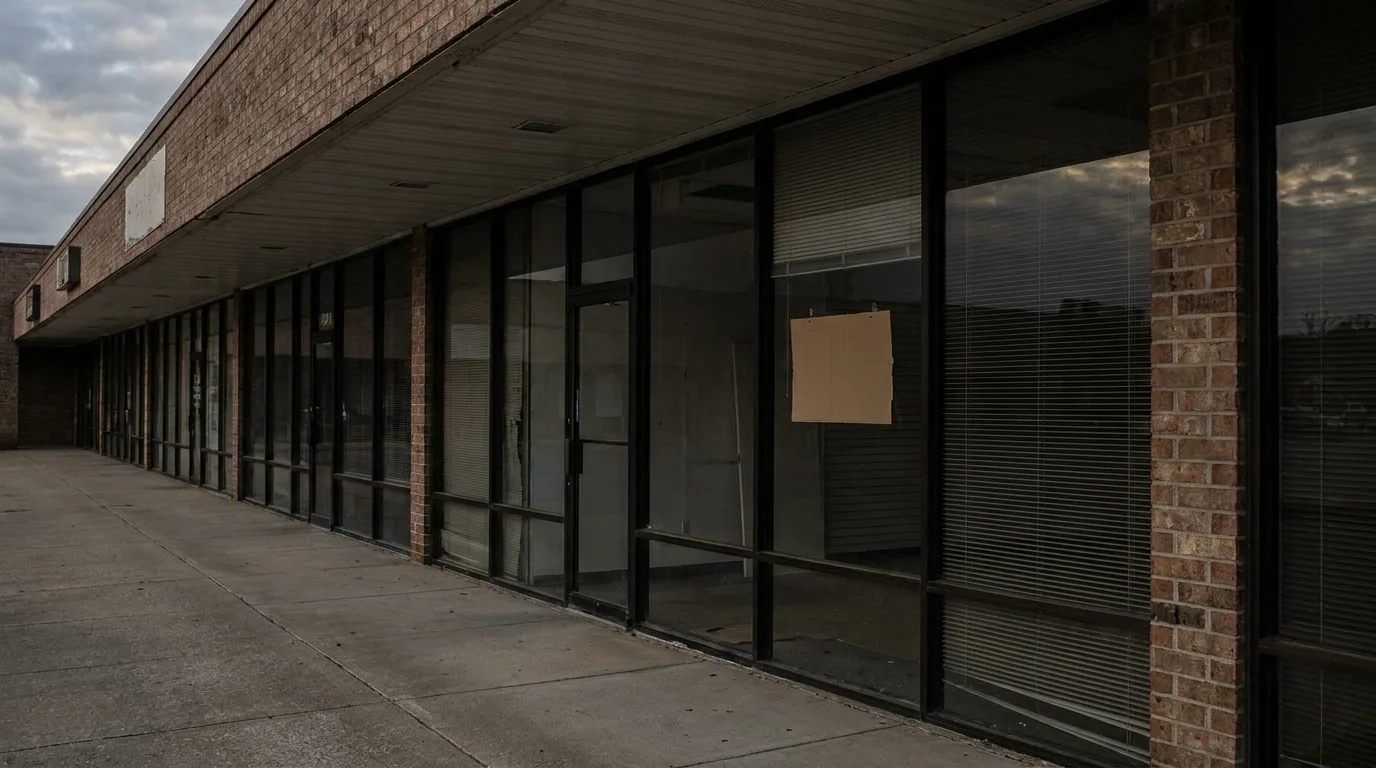
A Subway manager in Oregon told a local news station she found out her store was closing with no notice at all, though the food deliveries had already stopped showing up. She wasn't alone.
Subway shut 631 U.S. locations in 2024, pushing the domestic count to 19,502 and dropping the chain below 20,000 U.S. stores for the first time in two decades.
The U.S. Store Count Has Fallen Every Year Since 2020
The 2024 number is the headline, but it belongs to a longer slide. Subway peaked at more than 27,000 stores in 2015. Roughly 7,600 locations have gone dark since.
The recent domestic years:
| Year | U.S. closures |
|---|---|
| 2021 | 1,043 |
| 2022 | 571 |
| 2023 | 443 |
| 2024 | 631 |
The 2021 figure stands out, and much of it likely traces back to the pandemic. Harder to explain away is that closures kept coming after that, then ticked back up in 2024.
Subway Calls the Closures "Smart Growth"
In a statement to a trade publication, the company described its approach as "Smart Growth," optimizing its store footprint "using a strategic, data-driven approach to ensure restaurants are in the right location, image and format and operated by the right franchisees."
For a franchisee, that phrasing lays out the tests a store has to pass: location, image, format, and the operator running it. Miss on one and the store becomes a candidate for relocation or the door.
Subway hasn't gone past that statement publicly, other than to say it relocates or closes locations as needed.
One thing worth understanding about Subway specifically is that nearly every store is franchised rather than company-owned. Closure decisions often sit with individual operators weighing their own rent, labor costs, and sales.
That's part of why the corporate office can stay vague while dozens of stores in one state vanish at once.
Oregon Workers Say They Got No Warning
Oregon lost 23 Subway locations in 2024, all franchised under CapTen Enterprises and Subfecta LLC. Employees there said the shutdowns arrived without notice.
A manager at one of the closed stores, Joanne Kennedy, told KPTV: "No warning, no heads up, no transparency, completely and totally blindsided, every one of us." She also said food orders had stopped arriving in the run-up, while corporate messaging held that everything was normal.
Supply problems visible on the ground, reassurance coming down from above: that gap is a familiar pattern when franchise groups unwind. For hourly staff, the practical consequence is a paycheck ending with no lead time to line up the next job.
Globally, Subway Is Still Adding Stores
The shrinking U.S. map doesn't describe the whole company. Subway said it hit positive global net restaurant growth for the second year running, with nearly 37,000 locations worldwide, and another 10,000 international stores are reportedly in the pipeline.
So the U.S. count slipped under 20,000 while the chain opened more restaurants than it closed globally. American diners are seeing fewer Subways. Much of the rest of the world isn't.
Remodels and Kiosk Tests in the Surviving Stores
Stores that stayed open are being reworked. The floor plan is meant to move online delivery orders through without them tangling up the walk-in line; the cosmetic side of it is warmer wood tones, brighter lighting, big wall graphics, and messaging written for the neighborhood the store sits in.
Test locations are also running self-serve kiosks, ordering screens, and kitchen display systems while the company figures out what customers actually use.
Remodels are usually a cost the franchisee carries, which can be an uncomfortable ask for an operator whose sales are already soft. That's one reason store-refresh programs and store closures sometimes show up in the same year.
New Menu Items and a $6.99 Footlong Promotion
Subway has been widening the menu and running price promotions to pull people back in. Through the entire month of May 2025, any footlong was priced at $6.99.
Recent additions have included Doritos Footlong Nachos, a Hot Honey sauce, and an Oreo Footlong Cookie.
Those additions sit alongside the two things longtime customers bring up most often when they talk about what's gone:
- The $5 footlong, the deal that defined Subway's value reputation for years.
- The U-gouge bread cut, also called a canoe cut. Subway attributed the switch to the hinge cut to customer polling; plenty of customers suspect it simply moved faster behind the counter.
Red Lobster, Denny's, and the Rest of the Closure Wave
Big closure waves have hit Red Robin, Red Lobster, TGI Friday's, Hooters, Denny's, and International House of Pancakes as well. Two forces come up repeatedly in the explanations: private equity ownership structures and thinner disposable income in a lot of American households.
Picture a family that used to stop for sandwiches on the way home from a Saturday errand run. When the grocery bill climbs, that stop is one of the easiest things to cut. It's discretionary, and how anyone feels about the food doesn't enter into it.
Multiply that across a trade area and a location that used to clear its rent no longer does. Sit-down chains feel it first. Fast food built on a value reputation feels it too, especially once its signature cheap deal is gone.
Two Trend Lines Pointing Opposite Ways
Down in the U.S., up internationally. Whether the remodels and the new menu items reverse the domestic slide is still open, and store-level economics will settle it franchise by franchise rather than all at once: rent, labor, traffic.
The signs at any one location tend to be operational long before they're official. Supply gaps. Shortened hours. Equipment that stops getting fixed. Corporate announcements arrive after those.