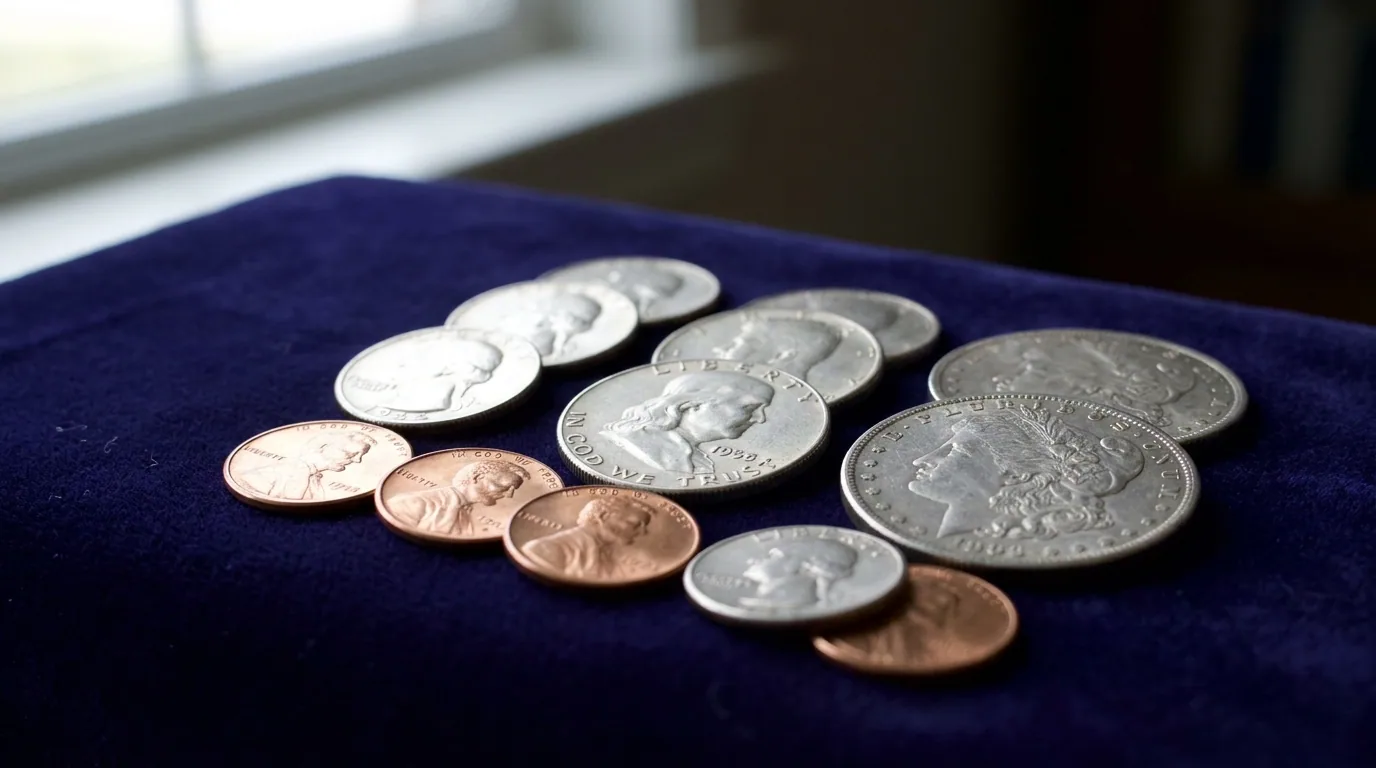
Most coins sitting in a change jar are worth exactly what their denomination says. Occasionally, however, an unusual coin can command significantly more because of a rare minting error, limited production, precious metal content, or exceptional condition.
Headline-making auction prices aren't representative of what an ordinary circulated coin will bring. They typically involve authenticated, professionally graded examples in unusually strong condition. Still, knowing what collectors look for can make examining old coins interesting—and potentially worthwhile.
What Can Make a Coin Valuable?
Four factors commonly influence collectible coin values: scarcity, errors or varieties, precious metal content, and condition.
A low mintage can limit supply, while unusual production characteristics—such as doubled dies or incorrect design elements—can create varieties collectors seek. Silver or gold content can also establish an underlying metal value.
Condition can make an especially dramatic difference. Two examples of the same coin may sell for vastly different amounts simply because one is worn and the other remains exceptionally well preserved.
1. 1955 Doubled Die Penny
The 1955 doubled die cent is known for noticeable doubling across letters and numbers on the obverse.
Unlike some collectible coins that were preserved from the beginning, examples circulated before the variety became widely recognized. That means worn examples can still exist outside established collections.
High-grade specimens have commanded substantial prices, but condition and authentication are critical when determining value.
2. 1969-S Doubled Die Penny
Another notable doubled die variety comes from 1969.
Its doubling can be observed on portions of the obverse lettering and date. The mint mark doesn't show the same doubling because it was applied separately during production.
Only a relatively small number of authenticated examples are known, contributing to the strong collector interest surrounding the variety.
3. 1992-D Close AM Penny
At first glance, this cent can look completely ordinary.
The important detail appears on the reverse. On the collectible variety, the letters A and M in “AMERICA” appear unusually close together because of the reverse design used during production.
Billions of cents were produced that year, but only a small number of this particular variety have been identified.
4. 1972 Doubled Die Penny
The 1972 doubled die cent is another variety where the unusual characteristic can be relatively noticeable.
Doubling can appear in the date and lettering on the front of the coin. As with other collectible varieties, however, authentication and condition play major roles in determining what an individual example might sell for.
5. 1932-D Washington Quarter
The first year of the Washington quarter series included a comparatively limited production from one mint.
Scarcity and historical interest have made well-preserved examples desirable to collectors.
The spectacular auction prices sometimes associated with this issue generally involve coins in exceptional condition. A heavily circulated example shouldn't be assumed to have comparable value.
6. 1964 Kennedy Half Dollar
The 1964 half dollar combines historical interest with precious metal content.
Coins from this year were struck with substantial silver content, meaning their underlying metal can contribute to their value even when they're not exceptionally rare.
Collector premiums can increase significantly for examples in outstanding condition, but ordinary circulated pieces shouldn't be valued using record auction prices.
7. Early Sacagawea Dollar Variety
Certain early dollar coins distributed through a cereal-box promotion have a distinctive eagle-tail-feather design.
Only some promotional examples display the characteristic, making identification more complicated than simply finding a coin from the correct year.
High-grade authenticated examples have attracted substantial collector interest.
8. 1990 Proof Penny Without a Mint Mark
Proof coins are produced primarily for collectors rather than everyday circulation.
A small number of 1990 proof cents were produced without the expected mint mark, creating a notable collectible variety.
Because these were proof coins, you're more likely to encounter one in an inherited collection or original collector material than in ordinary pocket change.
9. Low-Mintage 1996 Silver Dollar
Certain silver bullion coins can be worth more than their denomination based on precious metal content alone.
A comparatively low production total can add another source of collector demand. However, the highest auction prices generally apply only to exceptionally preserved examples receiving very high professional grades.
Because silver prices fluctuate, the underlying metal value also changes over time.
10. 2009 High-Relief Gold Coin
Modern gold collector coins demonstrate how precious metal content, design, production quality, and condition can combine to determine value.
Gold provides an underlying metal component, while exceptional preservation and collector demand may create an additional premium.
These coins generally aren't something you'd expect to encounter in pocket change. They're more likely to appear in established collections, inherited holdings, or secure storage.
Condition Can Change Everything
Professional grading commonly uses numerical scales to describe preservation and overall quality.
Even a difference of one or two grade levels can sometimes create a large price difference for scarce coins. That's why record auction prices should always be considered together with the exact variety and grade of the coin sold.
A record price doesn't establish what every example is worth.
Never Clean a Potentially Valuable Coin
If you find an unusual-looking coin, resist the temptation to make it shine.
Scrubbing, polishing, wiping, or chemically cleaning a collectible coin can alter its original surface and potentially reduce its desirability. Even tiny scratches can matter when condition is evaluated.
Instead, handle a promising coin carefully and consider professional authentication when its potential value could justify the expense.
Know What You're Actually Looking At
Rare coins can be exciting finds, but realistic expectations matter. Many of the most valuable examples aren't likely to appear in everyday change, and exceptional auction records usually represent unusually scarce, authenticated, high-grade specimens.
Check the date, mint mark, design details, metal composition, and condition before assuming you've discovered something valuable. If a coin appears to match a recognized rarity, authentication can help determine whether the unusual characteristic is genuine.
The small details—not simply the coin's age—are often what separate an everyday piece of change from a serious collectible.