Credit reports are built around loans and credit accounts. Rent, electricity, and a phone plan mostly stay off them unless something specific puts them there, so years of on-time payments can leave a file close to empty.
That's what makes "build credit without a credit card" a real question rather than a contradiction. Several things can get those payments on the report.
What Scoring Models Count, and Which Bills Reach a Bureau
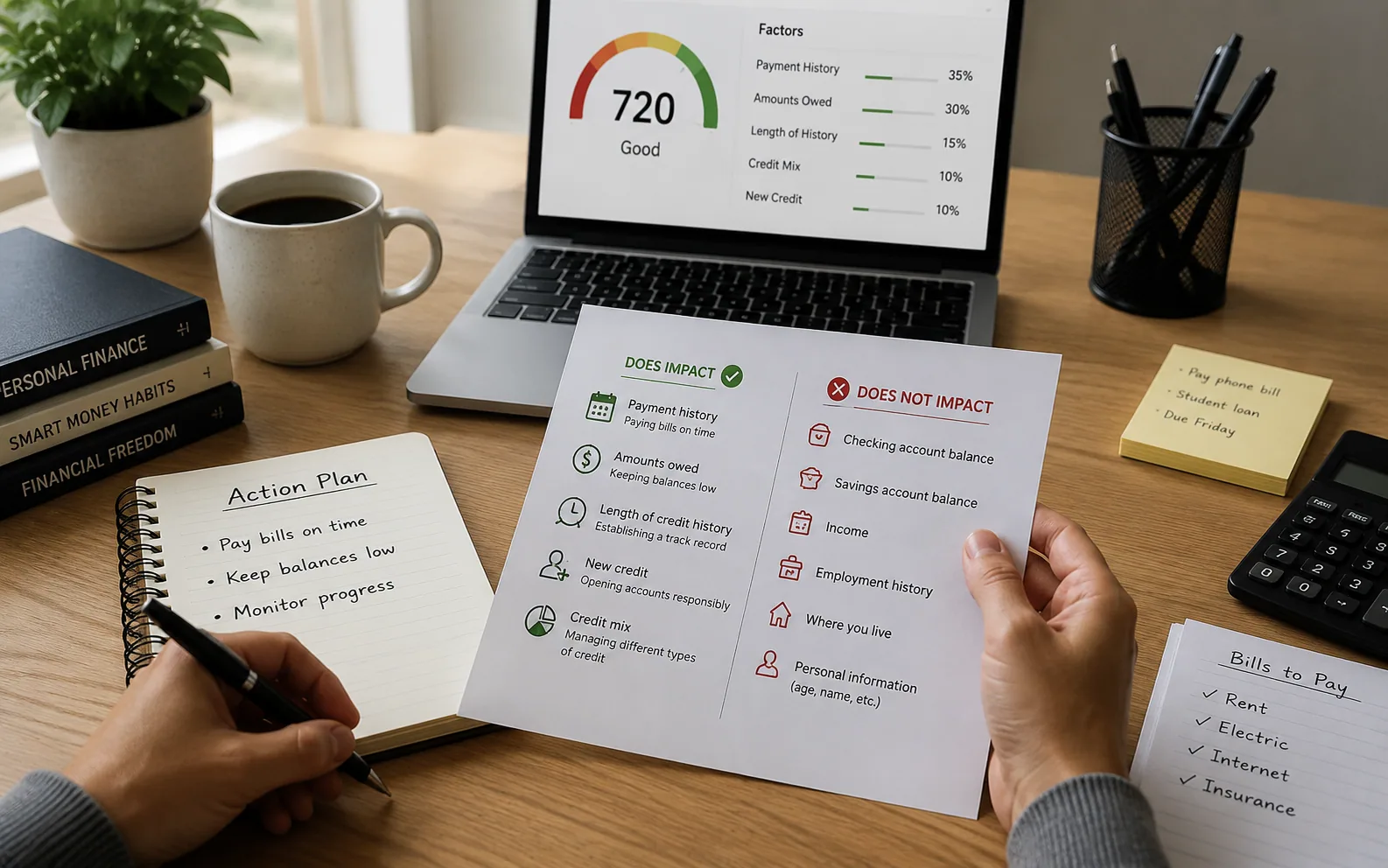
Scoring models look at payment history, how long accounts have been open, and the mix of credit types on the file. A loan does all three jobs at once: opening it starts a history, each on-time payment lengthens that history, and an installment loan adds a different account type than a revolving card.
Bills work differently. They only count if a service feeds them to a credit bureau, and the three major bureaus, Equifax, Experian, and TransUnion, don't automatically share the same data.
Two questions sort most of the options below: does someone have to approve you, and where does the payment information actually land?
| Route | Who has to approve it | What gets reported |
|---|---|---|
| Credit-builder loan | The lender | Installment loan payments |
| Secured credit card | The issuer; some don't run a hard credit check | Card payments and balances |
| Rent reporting service | No approval needed | On-time rent, to the bureaus that service works with |
| Bill-adding tools | No approval needed | Utility, phone, and streaming payments |
| Authorized user | The primary cardholder | That card's activity, in some cases |
How a Credit-Builder Loan Produces Installment History
Credit-builder loans exist for one purpose: putting installment payments on a credit report. You apply for an amount, but the money isn't handed over up front.
It's held as collateral until the loan is paid off. Certain programs keep that collateral in an interest-bearing savings account, and the interest belongs to the borrower, which is why the final payout can come to more than the amount of the loan.
Late payments get reported along with the on-time ones. One thing to check before signing up is whether the lender reports to all three bureaus or only one. A loan that feeds a single file does less than the marketing suggests.
Rent Reporting Reaches Only the Bureaus the Service Uses
Rent is usually the largest payment a household makes each month and the one least likely to appear on a credit report. Rent reporting services, among them Experian RentBureau, Rental Kharma, and RentReporters, put those payments onto participating credit reports.
Coverage is the detail that trips people up. Each service reports to specific bureaus. RentReporters sends rental payment data to Equifax and TransUnion; Experian RentBureau feeds Experian. Say a renter signs up for a service that reports to Equifax and TransUnion, then applies somewhere that pulls an Experian report.
The rent history isn't on the file the lender is looking at. Matching the service to the bureau you're trying to build is the difference between paying for months of reporting and getting nothing from it.
Experian Boost Is Free and Affects One Bureau Only
Experian Boost is a free tool that attaches positive payment history from utility bills, phone bills, streaming subscriptions, and qualifying rent to your Experian credit file.
No credit card is required to use it, new scores take effect immediately, and the FICO Score shown refreshes every 30 days when you sign in, along with a free personal privacy scan. Experian says the tool has added more than 46 million combined points to users' scores to date.
The limits come straight from Experian's own disclosures: results vary, not every payment is eligible, and some users see no improvement at all. Boost also touches nothing outside Experian. A lender that pulls a different bureau's file, or uses a score Boost doesn't affect, won't see the change.
Secured Cards Turn a Deposit Into the Credit Line
A secured card starts with a deposit, and the size of that deposit sets the limit. The money spent against it is yours rather than the bank's, but the payments and balances go to the bureaus the way any other card's would.
The secured Self Visa Credit Card shows how the terms look in practice. It carries a $0 intro annual fee for new customers the first year and $25 annually after that, with a variable APR of 27.49% based on the Prime Rate.
There's no hard credit check or credit score required. The security deposit starts as low as $100 and is refundable when the account closes and balances are settled, and the card reports to all three major credit bureaus.
Accounts are automatically considered for a higher credit line after 6 months with no extra deposit. What it doesn't offer is a welcome bonus or spending rewards.
Other secured cards use the same deposit mechanic with different extras. The Capital One Platinum Secured is built the same way.
The secured Chime Visa Credit Card has no annual fee, no credit check, and no monthly fees, and offers up to 2% cash back on eligible purchases with a qualifying direct deposit. As with any card, on-time payments may help a score and late payments may hurt it.
Student, Auto, and Mortgage Payments Already Report
Anyone repaying a student loan, car loan, or mortgage is already building credit without a card.
An installment loan in good standing gives a scoring model three separate things to read: a run of payments, an account with some age on it, and an account type that isn't a credit card. That's why one well-handled loan can carry a thin file further than people expect.
There's nothing to sign up for. The reporting is already happening. The work is staying current, because a missed payment goes on the report too.
A Personal Loan Builds History and Starts With a Hard Inquiry
A personal loan is a common no-card route: make the full payment each month and the account builds the same installment history a credit-builder loan does. Loan marketplaces exist for borrowers with new or low credit profiles, though rates and approval depend on the lender.
One trade-off comes up front. Applying usually triggers a hard credit check, which can temporarily knock a few points off a score. Interest is the other cost, since a loan taken out mainly to build credit still carries whatever rate the lender sets.
Authorized User Status Puts Someone Else's Payments on Your File
If you can't get a card or don't want one, being added as an authorized user on someone else's account is another path. You don't even need to carry the physical card. When the primary cardholder pays on time and keeps balances low, that behavior can show up on your file too.
The reverse also applies. Late payments or a maxed-out balance on that account can land on your report, which is why the route only works with someone you trust. It's also worth asking whether the card issuer reports authorized users at all, because not all of them do.
Co-Signing Makes You Liable for the Debt Itself
Co-signing has the same shared-fate structure as authorized user status, applied to a loan. Steady on-time repayment can show up positively for both people; missed payments can show up negatively for both.
Co-signers are also generally on the hook for the debt if the primary borrower stops paying, which makes this a bigger commitment than the paperwork implies.
Reading the Reports Shows What Actually Landed
Pulling your credit reports is how you find out whether any of the above is landing. It's also how errors surface: an account that isn't yours, a payment marked late that wasn't, a service you signed up for that never started reporting.
Some money management apps, including Quicken Simplifi, include credit score access and monitoring for changes alongside their budgeting tools, which is one way to keep the number in view without checking manually.
Cash Flow Is What Keeps the Payments On Time
Every method here depends on the same thing: money being available on the due date. If bills are hard to cover, the reporting works against you rather than for you.
Budgeting apps like Rocket Money work the cash-flow side, finding and canceling unwanted subscriptions, negotiating monthly bills such as phone, cable, and internet, and building budgets that track spending.
Freeing up room in a monthly budget doesn't build credit by itself, but it's what keeps a credit-builder loan or a reported rent payment from turning into a negative mark.
Which Routes Cost Money, and Which Mostly Cost Time
The routes split along price. Rent reporting, bill-adding tools, and staying current on a student or auto loan reframe payments that are already going out, and cost little beyond a service fee.
New accounts come with their own price tags: a deposit on a secured card, an annual fee, interest on a loan, a hard inquiry at application.
Where someone already has installment loans, the reporting is running and the work is keeping it clean. A file with no accounts on it needs something to report first, which is what a secured card or credit-builder loan provides, with rent or utility reporting filling in around it.
Either way it takes months of payments before the file looks any different, and a payment reported to one bureau does nothing on the report a lender pulls from another.